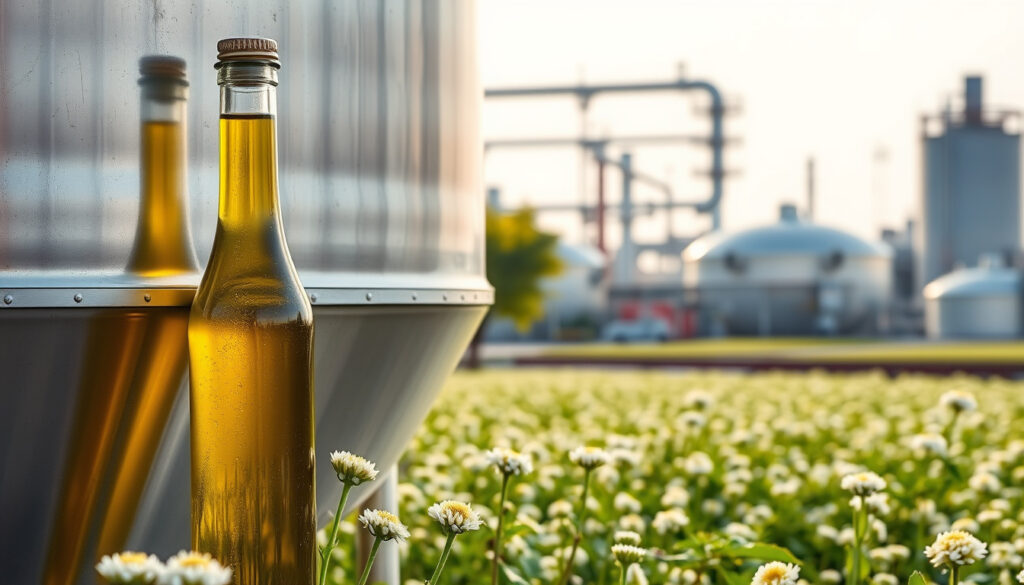
Is Rapeseed Oil Bad for You? Cold-Pressed vs Refined
Walk down any cooking oil aisle and you’ll see rapeseed oil sitting next to olive oil, sunflower oil, and a dozen others. But a growing online debate has many people wondering whether that bottle of golden oil is actually healthy or something to avoid.
Saturated fat per 100g: 7g (low) ·
Omega-6 content per tbsp: ~2.5g ·
Omega-3 content per tbsp: ~1.3g ·
Smoke point (refined): 400°F (204°C)
Quick snapshot
- Low in saturated fat (7%) (British Heart Foundation)
- Rich in omega-3, omega-6, and omega-9 (WebMD)
- Contains vitamin E (when cold-pressed) (Yorkshire Rapeseed Oil)
- Calorie density similar to other oils (British Heart Foundation)
- May improve cholesterol levels (LDL reduction) (British Heart Foundation)
- Supports heart health when used in moderation (British Heart Foundation)
- Cold-pressed version retains antioxidants (Yorkshire Rapeseed Oil)
- Linked to better metabolic health in studies (University of Queensland)
- Refined rapeseed oil is ultra-processed (EUFIC)
- High omega-6 can promote inflammation if omega-3 intake is low (Stanford Medicine)
- Traditional rapeseed (not canola) contains erucic acid (restricted in Canada/US) (EUFIC)
- Common in many processed foods, contributing to overconsumption (EUFIC)
- Olive oil: higher monounsaturated fat, more antioxidants (British Heart Foundation)
- Rapeseed oil: lower saturated fat, higher smoke point (British Heart Foundation)
- Both are heart-healthy choices; best depends on use (cooking vs dressing) (British Heart Foundation)
- Cold-pressed rapeseed oil is a suitable alternative to extra virgin olive oil (British Heart Foundation)
Six key facts about rapeseed oil, from its origin to its typical uses:
| Attribute | Details |
|---|---|
| Type | Vegetable oil from Brassica napus seeds |
| Processing | Refined (chemical) or cold-pressed (mechanical) |
| Saturated fat (per 100g) | 7g |
| Omega-6:Omega-3 ratio | Approx. 2:1 (WebMD) |
| Smoke point (refined) | 400°F (204°C) |
| Common uses | Frying, baking, salad dressings (cold-pressed), processed foods |
Is rapeseed oil healthy?
What nutrients does rapeseed oil contain?
- Low in saturated fat — 7g per 100g, less than half the amount in olive oil (British Heart Foundation)
- Contains omega-3 (alpha-linolenic acid), omega-6 (linoleic acid), and omega-9 (oleic acid)
- Cold-pressed versions retain vitamin E and phytosterols (Yorkshire Rapeseed Oil)
Does rapeseed oil raise cholesterol?
The British Heart Foundation says rapeseed oil contains omega-3, omega-6, and omega-9 fats, which can help reduce cholesterol when used in place of saturated fats. The omega-6:omega-3 ratio is roughly 2:1, which is considered balanced among seed oils (WebMD).
Is rapeseed oil inflammatory?
Early research suggested high intakes of linoleic acid (an omega-6 fat) could increase inflammation, but more recent evidence does not support that conclusion. The British Heart Foundation states there is no strong or consistent proof that omega-6 fats directly cause inflammation in humans (British Heart Foundation). Stanford Medicine adds that omega-3s seem a little more anti-inflammatory than omega-6s, but omega-6s are not harmful (Stanford Medicine).
The inflammation fear driving the seed oil debate is not supported by high-quality human trials. The real concern is the ratio: if you consume far more omega-6 than omega-3, the balance may tip toward a pro-inflammatory state, but rapeseed oil’s 2:1 ratio is actually one of the better ones among common cooking oils.
The implication: Rapeseed oil is a heart-healthy choice when used in moderation, especially if you choose cold-pressed versions that retain more nutrients. The anti-inflammatory claims against it are largely overblown by current evidence.
What is the unhealthiest oil to cook with?
What seed oil should I avoid?
- Highly processed seed oils (soybean, corn, sunflower) contain high omega-6 and are often made with chemical solvents (EUFIC)
- Partially hydrogenated oils (trans fats) are the worst for heart health
- Tropical oils (coconut, palm) are high in saturated fat, though their health effects are debated
What are the six seed oils to avoid?
Online wellness circles often list soybean, corn, canola (rapeseed), cottonseed, sunflower, and safflower oils as the “hateful eight” or “six to avoid.” However, the British Heart Foundation says current evidence does not show that these oils cause long-term inflammation when consumed as part of a balanced diet (British Heart Foundation).
Which oils are worst for heart health?
Cardiologists typically warn against partially hydrogenated oils (trans fats) and oils high in saturated fat when used in excess. Rapeseed oil is often considered a better choice when cold-pressed, because it is low in saturated fat and has a favorable fatty acid profile (British Heart Foundation).
The “unhealthiest” label depends on processing. A cheap, refined rapeseed oil used in fast food is not the same product as a cold-pressed bottle from a health food store. The processing method transforms the nutritional profile and the potential health impact.
The pattern: The worst oils are those that are hydrogenated (trans fats) or heavily refined with high heat and chemicals. Cold-pressed rapeseed oil does not belong in that category.
Why do people say seed oils are bad for you?
Are seed oils actually toxic?
No major health authority classifies seed oils as toxic. The British Heart Foundation says the idea that they cause inflammation is not supported by science (British Heart Foundation). EUFIC states that randomized controlled trials show adding linoleic acid to the diet does not increase inflammatory markers (EUFIC).
Is rapeseed oil ultra-processed?
Most supermarket rapeseed oil is refined using high heat and hexane, a chemical solvent. This qualifies as ultra-processed according to the NOVA classification. Cold-pressed rapeseed oil, on the other hand, is mechanically pressed without heat or chemicals, so it is not ultra-processed.
Is cold pressed rapeseed oil ultra-processed?
No. Cold-pressed rapeseed oil is made by mechanically pressing the seeds at low temperatures. It retains more antioxidants and flavor, and it meets the criteria for minimal processing (EUFIC).
The trade-off: The ultra-processing debate is real for refined rapeseed oil, but it does not apply to cold-pressed varieties. Consumers who want to avoid ultra-processed foods should look for “cold-pressed” or “extra virgin” on the label.
Is rapeseed oil ultra-processed?
What does ‘ultra-processed’ mean for cooking oils?
Ultra-processed foods are defined by the NOVA classification as industrial formulations made with techniques like hydrogenation, chemical extraction, and the addition of preservatives. Refined rapeseed oil uses hexane extraction and high-temperature deodorization, fitting the ultra-processed category.
How is refined rapeseed oil made?
- Seeds are crushed and heated to extract oil
- Hexane is used to dissolve remaining oil
- The oil is degummed, bleached, and deodorized at high temperatures
- This process removes natural antioxidants and flavor compounds
Is cold pressed rapeseed oil ultra-processed?
No. Cold-pressed rapeseed oil is produced by mechanically pressing the seeds without heat or chemical solvents. It retains more vitamin E, phytosterols, and flavor. The British Heart Foundation notes that cold-pressed rapeseed oil is a good source of omega-3 and has a healthier balance of fats than many other cooking oils (British Heart Foundation).
If you care about ultra-processing, choose cold-pressed rapeseed oil. Refined rapeseed oil is ultra-processed and widely used in packaged foods, but that does not make it toxic — it just means it is less nutrient-dense than its cold-pressed counterpart.
Why this matters: The processing level directly affects the oil’s antioxidant content and potential health benefits. Cold-pressed offers more than just a marketing label.
Is rapeseed oil healthier than olive oil?
Four oils, one question: which is better for your heart? Here’s how they compare across key nutritional markers.
| Attribute | Rapeseed oil (refined) | Rapeseed oil (cold-pressed) | Olive oil (extra virgin) | Olive oil (regular) |
|---|---|---|---|---|
| Saturated fat per 100g | 7g | 7g | 14g | 14g |
| Monounsaturated fat | ~63% | ~63% | ~73% | ~73% |
| Omega-3 (ALA) per tbsp | ~1.3g | ~1.3g | ~0.1g | ~0.1g |
| Omega-6 per tbsp | ~2.5g | ~2.5g | ~1.3g | ~1.3g |
| Smoke point | 400°F (204°C) | ~350°F (177°C) | ~375°F (191°C) | ~410°F (210°C) |
| Antioxidants (polyphenols) | Low (lost during refining) | Moderate | High | Low |
| Processing level | Ultra-processed | Minimally processed | Minimally processed | Refined (may be ultra-processed) |
Which oil do cardiologists recommend?
Many cardiologists recommend extra virgin olive oil as a first choice because of its high polyphenol content and strong evidence for heart health. However, the British Heart Foundation says rapeseed oil is also a good option, especially for high-heat cooking, because it has a higher smoke point and a favorable fatty acid profile (British Heart Foundation).
What are the top 3 healthiest oils?
- Extra virgin olive oil — high in polyphenols and monounsaturated fat
- Cold-pressed rapeseed oil — low saturated fat, balanced omega-3/6, good for cooking
- Avocado oil — high smoke point, monounsaturated fat
Rapeseed oil vs olive oil for cooking
For frying at high temperatures, refined rapeseed oil’s smoke point of 400°F makes it more stable than extra virgin olive oil. For salad dressings, extra virgin olive oil provides more flavor and antioxidants. Cold-pressed rapeseed oil can serve as a middle ground: it has a moderate smoke point and a nutty flavor suitable for both cooking and dressing.
Extra virgin olive oil wins on antioxidants and taste, but rapeseed oil wins on saturated fat content and heat stability. For the average home cook, having both in the pantry is a smart strategy.
Upsides
- Low in saturated fat (7%) compared to butter (51%) and coconut oil (87%)
- Contains omega-3, which is rare in cooking oils
- Cold-pressed version retains vitamin E and phytosterols
- High smoke point makes it suitable for frying
- Neutral flavor works in many recipes
Downsides
- Refined rapeseed oil is ultra-processed using hexane
- High omega-6 can be problematic if omega-3 intake is low
- Most supermarket rapeseed oil is refined, not cold-pressed
- Common in processed foods, contributing to overconsumption
- Traditional rapeseed (non-canola) can contain erucic acid, which is restricted in some countries
Confirmed facts vs What’s unclear
Confirmed facts
- Rapeseed oil is low in saturated fat compared to butter, lard, and palm oil (British Heart Foundation)
- Cold-pressed rapeseed oil is not ultra-processed (EUFIC)
- Refined rapeseed oil is widely used in processed foods
- Omega-6 fats are essential but excess can increase inflammation in the context of low omega-3 intake (Stanford Medicine)
What’s unclear
- Whether long-term use of refined rapeseed oil contributes to chronic disease in balanced diets
- Optimal omega-6 to omega-3 ratio for cardiovascular health
- Erucic acid content in modern canola varieties vs traditional rapeseed — regulatory thresholds differ by country
What the experts say
“Modern evidence shows rapeseed oil is safe to use and does not cause inflammation.”
— British Heart Foundation (UK heart health charity) Source
“Seed oils are not inherently toxic, but high intake of omega-6 relative to omega-3 may be problematic.”
— Cleveland Clinic (US academic medical center) Source
“The idea that omega-6 fatty acids promote inflammation is not backed up by science.”
— Stanford Medicine (US research university) Source
For the average shopper in the US or UK, the choice between rapeseed oil and olive oil comes down to cooking method and budget. If you’re frying at high heat, cold-pressed rapeseed oil is a solid, heart-healthy option. If you’re dressing a salad, extra virgin olive oil offers more antioxidants. The real risk isn’t the oil itself — it’s the processed foods that contain cheap refined rapeseed oil. For the health-conscious cook, the decision is clear: buy cold-pressed rapeseed oil for cooking, and reserve extra virgin olive oil for finishing dishes.
viva.org.uk, pressnative.org, carefocusdaily.com, linkedin.com, bhf.org.uk, hunterandgatherfoods.com
Frequently asked questions
Is cold pressed rapeseed oil bad for you?
No. Cold-pressed rapeseed oil is minimally processed, low in saturated fat, and contains omega-3 and omega-6 in a balanced ratio. It is considered a healthy cooking oil by the British Heart Foundation (British Heart Foundation).
Is rapeseed oil bad for cholesterol?
No. Rapeseed oil contains unsaturated fats that can help lower LDL cholesterol when used in place of saturated fats (British Heart Foundation).
Is rapeseed oil bad for dogs?
In small amounts, rapeseed oil is not toxic to dogs, but it is not recommended as a regular part of their diet. Dogs have different fatty acid requirements, and high amounts of omega-6 may cause inflammation. Always consult a veterinarian.
Why is rapeseed oil in everything?
Rapeseed oil is cheap to produce, has a neutral flavor, and a high smoke point, making it ideal for processed foods, frying, and baking. It is one of the most widely used vegetable oils in the world.
What are the six seed oils to avoid?
Online wellness sources often list soybean, corn, canola (rapeseed), cottonseed, sunflower, and safflower oils. However, major health organizations like the British Heart Foundation say these oils are safe in moderation and do not cause inflammation (British Heart Foundation).
Which oil do cardiologists recommend?
Many cardiologists recommend extra virgin olive oil as a first choice, but also consider cold-pressed rapeseed oil a good option for high-heat cooking due to its low saturated fat and high smoke point (British Heart Foundation).
What are the top 3 healthiest oils?
Extra virgin olive oil, cold-pressed rapeseed oil, and avocado oil are widely considered the healthiest options for different cooking needs.
More related posts
 What Is an S Corp – Definition, Requirements, Benefits
 Irish Mirror Breaking News: Latest Ireland Crime, Politics, Sports
 AZ Alkmaar vs Go Ahead Eagles: Head-to-Head Stats
 I There a Viru Going Around at the Moment? Symptom & Duration
 Dingle to Tralee Bus: Timetable, Fare & Route 275 Guide
 Is Mounjaro Available in Ireland – 2025 Status, Prices and Access Guide
 Rottweiler Puppies For Sale Ireland – Prices, Breeders and Buying Guide
 Range Rover For Sale Ireland – Used Prices, Dealers and Deals Guide
