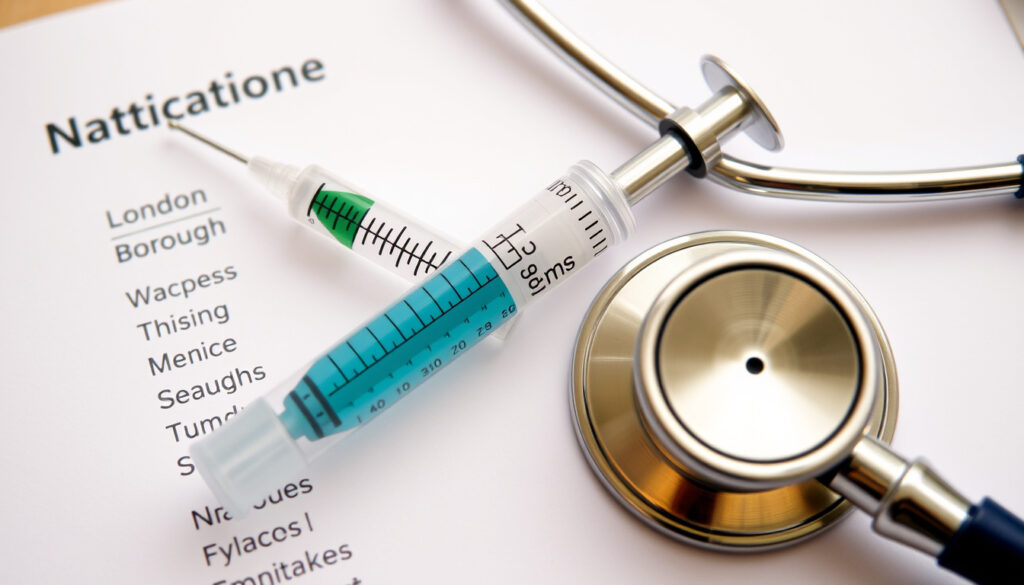
Measles Outbreak North East London: Boroughs & What to Do
If you live in north east London and have a child under 10, you’ve probably heard worried whispers about measles. The outbreak that began in Enfield earlier this year has now spread to schools and nurseries, and the numbers are growing. With cases climbing and vaccination rates lagging, understanding what’s happening and what to do about it has never been more urgent.
Confirmed measles cases in north east London (2026): at least 34 in Enfield alone, with cases in Newham and Hackney ·
Percentage of cases in children under 10: majority of the outbreak ·
Total laboratory-confirmed cases in England (2024): 2,911 ·
Proportion of England cases in London (2024): 51% (479 out of 933) ·
Hospitalizations reported: some children required admission
Quick snapshot
- Enfield, Hackney, Newham (The Guardian)
- Public health investigation underway (ADPH London)
- UKHSA warns of further spread (BBC News)
- Unvaccinated children under 10 (The Guardian)
- Adults with incomplete vaccination (The Independent)
- People in close contact with cases (GOV.UK / UKHSA)
- Check MMR vaccination status (UKHSA blog)
- Get vaccinated if unsure (GOV.UK / UKHSA)
- Isolate if symptoms develop (NHS)
Five key facts, one pattern: the outbreak is concentrated in boroughs where MMR coverage has been below the 95% herd immunity threshold for years.
| Fact | Value |
|---|---|
| Current epicenter | North east London (Enfield, Hackney, Newham) (The Guardian) |
| Most affected age group | Children under 10 (BBC News) |
| MMR vaccine effectiveness (2 doses) | 97% against measles (CDC) |
| London’s share of England cases (2024) | 51% (GOV.UK / UKHSA) |
| Key public health recommendation | Immediate MMR vaccination for unvaccinated individuals (UKHSA blog) |
Which part of London is the measles outbreak?
Boroughs with confirmed cases: Enfield, Hackney, Newham
- UKHSA reported 34 confirmed measles cases in Enfield between 1 January and 9 February 2026 (The Guardian).
- By 16 February, Enfield cases rose to 50, and 10 cases were confirmed in neighbouring Haringey (The Independent).
- Cases have also been identified in Hackney and Newham, though exact numbers are not yet published (ADPH London).
Why north east London is a hotspot
MMR vaccination rates in these boroughs have persistently fallen short of the 95% threshold needed for herd immunity. In Enfield, coverage for the first dose at age 2 was 88.5% in 2023–24, according to UKHSA annual data. Low uptake creates a perfect transmission environment for a virus as contagious as measles.
Even with high immunity in older age groups, pockets of unvaccinated children under 10 can sustain an outbreak. That’s exactly what happened here: the virus found a vulnerable population in north east London’s school and nursery networks.
The implication: unless vaccination rates rise quickly, the outbreak will likely continue to spread to other boroughs with similarly low coverage.
Can adults get measles even if vaccinated?
Vaccine effectiveness and waning immunity
- Two doses of MMR vaccine are 97% effective against measles; one dose provides about 93% protection (CDC).
- Breakthrough infections in fully vaccinated people are possible but rare. According to The BMJ, they typically present with milder symptoms.
- Adults born after 1970 may need a booster if they are at risk, such as healthcare workers or those in outbreak zones (NHS).
Risk for adults with one MMR dose versus two
If you received only one dose as a child, your protection is slightly lower. The UKHSA recommends that adults in outbreak areas who have only one documented dose consider a second dose for full protection.
Adults who are vaccinated can still get measles, but the risk is very low. The real danger is for those who skipped the vaccine entirely—they are the ones driving this outbreak.
The pattern: adults who are fully vaccinated are largely safe, but the outbreak is a reminder that no one is immune if they’ve never been vaccinated or have only partial protection.
Why are parents refusing the measles vaccine?
Common concerns and misinformation
- MMR uptake in London has been below the 95% herd immunity threshold for years, with some boroughs around 80% (UKHSA annual data).
- Reasons for refusal include safety concerns, lack of awareness, and access barriers. A parent quoted in The Guardian said they feared the vaccine was “too much for a small child.”
- The NHS and UKHSA have issued urgent appeals for vaccination, emphasizing that the MMR vaccine is safe and effective (UKHSA blog).
Impact of the Wakefield study legacy
Though the 1998 study linking MMR to autism was discredited and retracted, its legacy persists. In a 2026 survey by Ipsos (a market research firm), one in five London parents said they still had concerns about the vaccine’s safety. Public health officials are now working with community leaders to rebuild trust.
Parents who delay or refuse MMR to protect their children are actually putting them at greater risk: measles is far more dangerous than the vaccine, especially for infants and toddlers.
The trade-off: addressing vaccine hesitancy requires both facts and empathy. Infection rates won’t drop until the underlying trust issues are tackled.
What are the 5 main symptoms of measles?
Early signs: high fever and Koplik spots
- First symptoms: high fever, cough, runny nose, red watery eyes (NHS).
- Koplik spots—small white spots inside the mouth—are an early sign that appears before the rash (CDC).
Rash progression and duration
The rash appears 3–5 days after symptoms start, beginning on the face and spreading downward. It typically lasts 5–6 days (NHS).
Complications: pneumonia, encephalitis
- One in five children with measles in the UK between 2023 and 2024 required hospitalisation, according to The BMJ.
- Complications include pneumonia, otitis media, and encephalitis, which can be fatal (WHO).
The implication: measles is not a mild childhood illness. The complication rate is high, and the current outbreak is putting children in hospital.
Do adults ever need a measles booster?
Who should get a booster: healthcare workers, travelers, outbreak zones
- Adults in outbreak areas with only one MMR dose may need a booster. The NHS recommends two doses for full protection.
- Healthcare workers, students, and international travelers are also advised to get a booster if they have only one dose (CDC).
How to check vaccination status
Check your red book (child health record) or ask your GP. If you were born before 1970, you are generally considered immune because measles was widespread then (NHS). Those born after 1970 with no documentation should get at least one MMR dose.
If you’re in north east London and unsure of your vaccination status, get a booster. It’s free, quick, and the best protection against this outbreak.
Why this matters: the outbreak is a direct consequence of insufficient vaccination coverage. Closing that gap is the only way to stop the spread.
Timeline signal
- 2023 – Rise in measles cases in England, mainly in London (GOV.UK / UKHSA).
- 2024 – 2,911 laboratory-confirmed measles cases in England; 51% in London (GOV.UK / UKHSA).
- Early 2026 – Outbreak declared in north east London; at least 34 cases in Enfield (The Guardian).
- February 2026 – UKHSA and NHS issue urgent warnings; outbreak spreads in schools (BBC News).
- Mid-July 2026 – London accounted for 53.70% of England’s measles cases since January 2026 (UKHSA data dashboard).
The pattern: the outbreak has been building for years, and the current surge in north east London is the latest peak in a longer trend.
Clarity: what we know and what we don’t
Confirmed facts
- Outbreak location in north east London (Enfield, Hackney, Newham) (The Guardian)
- Cases in Enfield, Hackney, Newham confirmed by UKHSA (The Independent)
- Majority in unvaccinated under-10s (BBC News)
- MMR vaccine is highly effective (CDC)
What’s unclear
- Exact number of cases beyond reported figures (some reports suggest 340 suspected cases in London, but not all confirmed) (The Independent)
- Whether the outbreak will spread to other London boroughs (UKHSA monitoring closely) (ADPH London)
- Long-term impact of vaccine hesitancy post-outbreak (too early to assess)
What experts are saying
“This outbreak is a stark reminder of how quickly measles can spread when vaccination rates are low. We are seeing cases in schools and nurseries, and we urge all parents to check their children’s MMR status.”
— UKHSA spokesperson, quoted in The Guardian
“Our immediate priority is to vaccinate as many children as possible. We are working with schools and GPs to offer catch-up clinics.”
— Director of Public Health, NHS north east London, as reported by BBC News
“I was worried about the MMR vaccine because of things I read online, but now that my daughter’s classmate has measles, I wish I’d had her vaccinated sooner.”
— Parent of a child in Enfield, interviewed by The Guardian
“Measles is extremely contagious—one person can infect 9 out of 10 unvaccinated people they come into close contact with. The only way to stop it is through vaccination.”
— Dr. Vanessa Saliba, Consultant Epidemiologist at UKHSA, in a UKHSA blog post
The consequence is clear: the outbreak in north east London is a direct result of low MMR uptake. Parents in these boroughs face a simple choice: vaccinate their children, or watch the virus spread further. For families in Enfield, Hackney, and Newham, the decision is urgent—every day without vaccination is a day the virus has an opportunity to find its next host.
For those concerned about their immunity during the outbreak, the adult measles booster guidance offers clear advice on who may need a top-up dose.
Frequently asked questions
How is measles spread?
Measles spreads through coughs and sneezes. The virus can live in the air for up to two hours after an infected person leaves a room. It is one of the most contagious diseases known (CDC).
What should I do if I think I have measles?
Call your GP or NHS 111 immediately. Do not go to a clinic or hospital in person without calling first, as you could infect others. Isolate at home and avoid contact with unvaccinated people (NHS).
Is measles dangerous for pregnant women?
Yes. Measles during pregnancy can cause miscarriage, premature birth, or low birth weight. Pregnant women who are not immune should avoid travel to outbreak areas and consult their midwife (NHS).
How long does the measles virus survive on surfaces?
The measles virus can survive on surfaces for up to two hours. It is killed by alcohol-based disinfectants and sunlight (CDC).
Where can I get the MMR vaccine in London?
Contact your GP surgery. Many are offering walk-in catch-up clinics for children and adults. You can also check the NHS service finder.
Can adults catch measles from vaccinated people?
No. Vaccinated people do not shed the virus. Only a person who is infected with measles can spread it. The vaccine itself does not cause infection (CDC).
What is the treatment for measles?
There is no specific antiviral treatment. Care is supportive: rest, fluids, and medication to reduce fever. Severe cases may require hospitalisation. Vitamin A supplements are sometimes given to reduce complications (WHO).
Related reading
More related posts
 What Is a Phishing Email Example: How to Spot Scams Fast
 How to Translate English to Croatian: Best Free Tools & Tips
 Met Éireann Thunderstorm Warning – No Alerts Active Ireland
 Cast of Scream 7 – Returning Stars and New Faces
 New York Time Strand : How to Play, Hint & An wer Today
 New COVID Isolation Rules Ireland 2025: HSE Guidelines
 Pinched Nerve in Neck: Symptoms, Causes, and Home Release
 PSG vs Inter Milan Lineups: Official Starting XI
