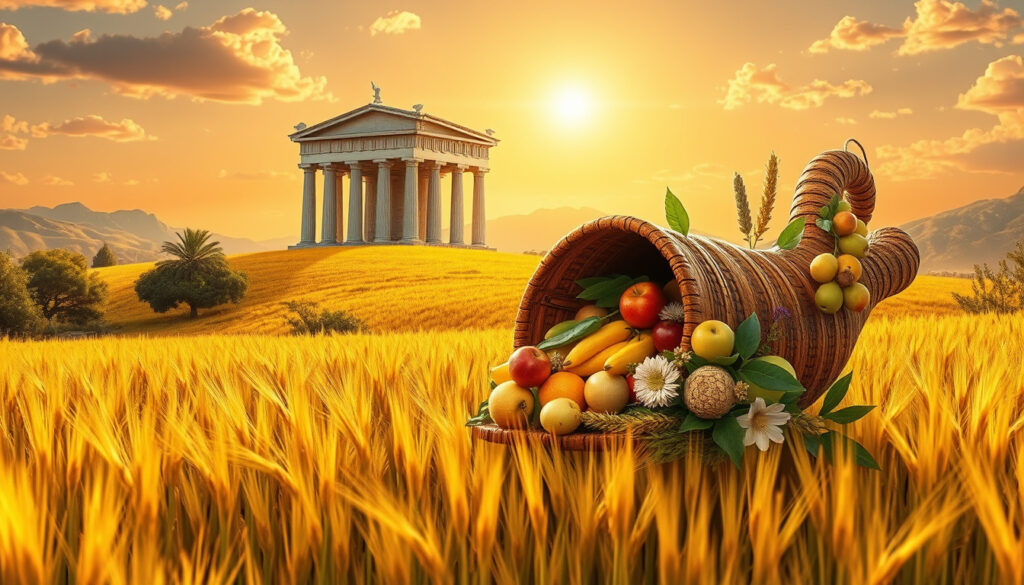
Greek Goddess of Fertility: Roles, Symbols Explained
When you hear “fertility goddess,” one name usually comes to mind first: Aphrodite. But the ancient Greeks saw fertility in many forms—from the earth’s harvest to a woman’s labor. This guide walks through the major Greek goddesses of fertility, their symbols, and the surprising paradox of a virgin who aids childbirth.
Major Greek Fertility Goddesses: 5+ ·
Aphrodite: Goddess of Love and Fertility: Most recognized ·
Demeter: Goddess of Agriculture and Fertility: Earth’s fertility ·
Eileithyia: Goddess of Childbirth: Childbirth helper
Quick snapshot
- Aphrodite is the goddess of love and fertility (Encyclopaedia Britannica (authoritative reference))
- Demeter is the goddess of agriculture and fertility (PubMed Central (peer-reviewed medical journal))
- Artemis protects women during childbirth (Wikipedia (crowdsourced encyclopedia))
- Whether Artemis should be classified as a fertility goddess given her virginity (To Make a Mommy (parenting website))
- The exact role of Priapus as a fertility god vs. phallic symbol (Wikipedia (crowdsourced encyclopedia))
- Mythological timelines span centuries, with no single historical record (Wikipedia (crowdsourced encyclopedia))
- Fertility cults were active from the Mycenaean period onward (Journal of Academic Social Science Studies (academic journal))
- Explore each goddess’s myths and cults below
- Learn how their symbolism still influences modern thought
The five major goddesses associated with fertility each hold distinct domains. One pattern: the Greek pantheon separates sexual fertility (Aphrodite), agricultural abundance (Demeter), and female reproductive life (Hera, Eileithyia), while Artemis occupies a paradoxical space as a virgin protector of childbirth.
| Goddess | Primary Domain |
|---|---|
| Most prominent fertility goddess | Aphrodite |
| Goddess of agriculture | Demeter |
| Goddess of childbirth | Eileithyia |
| Virgin goddess of childbirth | Artemis |
| Goddess of marriage and fertility | Hera |
Who are the Greek goddesses of fertility?
Major fertility goddesses in Greek mythology
At least five major goddesses are associated with fertility: Aphrodite, Demeter, Hera, Artemis, and Eileithyia. Their domains cover sexual love, agriculture, marriage, childbirth, and even the hunt—reflecting a broad definition of fertility in ancient Greek religion (Wikipedia (crowdsourced encyclopedia)). According to the Encyclopaedia Britannica (authoritative reference), Aphrodite is the goddess of love, beauty, and fertility, while PubMed Central (peer-reviewed medical journal) confirms that Demeter presided over grains and the fertility of the earth.
- Aphrodite – sexual fertility, love, beauty
- Demeter – agricultural fertility, harvest, sacred law
- Hera – marriage, female fertility, childbirth
- Artemis – childbirth protection, wilderness, chastity
- Eileithyia – labor and delivery
The Greeks did not limit fertility to one sphere. A woman could pray to Aphrodite for conception, to Hera for a healthy marriage, and to Eileithyia for a safe birth—each goddess covering a different stage of the reproductive journey.
Lesser-known fertility deities and nymphs
Beyond the Olympians, figures like Persephone (associated with spring and plant fertility), Dionysus (fertility of the vine), and Priapus (rustic phallic god) also played roles (Wikipedia (crowdsourced encyclopedia)). Nymphs, especially dryads and naiads, were often called upon for local fertility blessings.
The pattern: Greek fertility was not a single concept but a spectrum of divine responsibilities, from the bedchamber to the wheat field.
Who is the Greek goddess of love and fertility?
Aphrodite’s myths and symbols
Aphrodite is the primary goddess of love, beauty, and sexual fertility. She was born from sea foam near Cyprus, according to Hesiod’s Theogony, and her symbols include the dove, rose, myrtle, and apple (Encyclopaedia Britannica (authoritative reference)). The pomegranate, though often linked to Persephone, also features in Aphrodite’s mythology as a fertility symbol (Scribd (document sharing)).
Aphrodite’s role in fertility cults
One source distinguishes Aphrodite’s fertility role as tied more to love and sex than to agricultural fertility (To Make a Mommy (parenting website)). Her worship often involved temple prostitution and rituals aimed at ensuring sexual reproduction. The Journal of Academic Social Science Studies (academic journal) notes that Aphrodite stood out as a fertility cult figure in Ancient Greek civilization.
“Aphrodite is described as the ancient Greek goddess of love, beauty, and fertility.”
— Encyclopaedia Britannica (authoritative reference)
The implication: Aphrodite’s domain is personal and biological fertility, not the earth’s cycles. This sets her apart from Demeter and aligns her with the human experience of desire and reproduction.
Which goddess is the goddess of fertility?
Demeter and agricultural fertility
Demeter is the goddess of agriculture, harvest, and earth’s fertility. A scholarly review on PubMed Central (peer-reviewed medical journal) states that Demeter presided over grains and the fertility of the earth, and that the moon was commonly associated with fertility and growth in ancient mythology. Her symbols include wheat, cornucopia, and torch (To Make a Mommy (parenting website)). The myth of Demeter and Persephone explains the seasons: when Persephone descends to the underworld, Demeter mourns and the earth becomes barren.
Hera as protector of marriage and fertility
Hera, queen of the gods, is the goddess of marriage and female fertility. Wikipedia (crowdsourced encyclopedia) lists her as a Greek goddess of marriage, women, women’s fertility, and childbirth. Her symbols include the peacock, cow, and pomegranate. Hera’s cult at Argos was one of the most important in ancient Greece, focusing on marital fidelity and procreation.
Demeter ensures the food supply; Hera protects the family line. Both are fertility goddesses, but their spheres rarely overlap—one belongs to the fields, the other to the hearth.
The implication: Demeter and Hera represent two sides of fertility—one sustains life through food, the other through family.
Why did Artemis protect her virginity?
Artemis as a virgin goddess of childbirth
Artemis is described as the goddess of the hunt, wilderness, the Moon, chastity, and childbirth (Wikipedia (crowdsourced encyclopedia)). She remained a virgin to maintain independence and authority—a rare status for a female deity in Greek myth. Yet paradoxically, she was invoked by women during labor. To Make a Mommy (parenting website) notes that Artemis is not technically a fertility goddess, but she protected women during childbirth and acted as a guardian over young women and girls.
The myth of Artemis and Orion
The myth of Orion illustrates Artemis’s fierce independence. Orion, a giant hunter, either attempted to rape Artemis or boasted he could kill every animal on earth. Artemis killed him—either with a scorpion or her arrow—reinforcing her defiance of male domination. This story cements her virginity as a symbol of self‑determination.
“Artemis is not technically a fertility goddess, but she was known to protect women during childbirth and act as a guardian over young women and girls.”
— To Make a Mommy (parenting website)
The catch: Artemis blurs the line between fertility and protection. Her virginity does not negate her role in childbirth; rather, it reframes fertility as a domain she oversees without experiencing it herself.
Who is the Greek goddess of female fertility?
Hera and Eileithyia as goddesses of female fertility
Hera is the goddess of marriage and female fertility. Wikipedia (crowdsourced encyclopedia) confirms her association with women’s fertility and childbirth. Eileithyia is the specific goddess of childbirth and midwifery—she helps women during delivery. Her symbols include a torch (representing the light of life) and raised hands (Wikipedia (crowdsourced encyclopedia)).
The cult of Hera at Argos
The Heraion of Argos was one of the major religious centers of the ancient world. Women would pray to Hera for conception and safe delivery, reinforcing her role as the protector of female fertility. Eileithyia had her own sanctuaries, often near temples of Hera or Artemis.
What this means: Women in ancient Greece had a dedicated divine support system for every stage of reproduction, from marriage through delivery.
Comparison of Greek fertility goddesses
Five major goddesses, four different fertility domains, one unifying thread: the Greeks believed that reproductive success—human, animal, or agricultural—depended on divine favor. The table below contrasts their roles, symbols, and Roman equivalents.
| Goddess | Primary realm | Symbols | Roman counterpart |
|---|---|---|---|
| Aphrodite | Love, beauty, sexual fertility | Dove, rose, myrtle, apple | Venus |
| Demeter | Agriculture, harvest, earth’s fertility | Wheat, cornucopia, torch | Ceres |
| Hera | Marriage, women, female fertility | Peacock, cow, pomegranate | Juno |
| Artemis | Childbirth protection, wilderness | Bow, deer, crescent moon | Diana |
| Eileithyia | Childbirth, labor, midwifery | Torch, raised hands | Lucina |
The pattern: Each goddess maps to a distinct life domain, showing how the Greeks segmented fertility into manageable divine portfolios.
Confirmed facts and what remains unclear
Confirmed facts
- Aphrodite is the Greek goddess of love, beauty, and fertility (Encyclopaedia Britannica (authoritative reference))
- Demeter is the goddess of agriculture and earth’s fertility (PubMed Central (peer-reviewed medical journal))
- Artemis protects women during childbirth despite her virginity (Wikipedia (crowdsourced encyclopedia))
- Eileithyia is the goddess of childbirth and midwifery (Wikipedia (crowdsourced encyclopedia))
- Hera is the goddess of marriage and female fertility (Wikipedia (crowdsourced encyclopedia))
What’s unclear
- Whether Artemis should be classified as a fertility goddess given her virginity (To Make a Mommy (parenting website))
- The exact role of Priapus as a fertility god vs. phallic symbol (Wikipedia (crowdsourced encyclopedia))
- Which specific nymphs were considered fertility deities vs. nature spirits (no strong consensus)
Because most ancient sources are fragmentary, scholars still debate whether certain goddesses—like Hecate—should be considered fertility figures. The low confidence of many claims means some classifications remain tentative.
The catch: The fragmentary nature of ancient sources means our understanding of these goddesses will always be partial.
Quotes from authoritative sources
“Aphrodite is associated with sexuality, fertility, and beauty.”
“Demeter presided over grains and the fertility of the earth.”
— PubMed Central (peer-reviewed medical journal)
“Greek tradition includes both Aphrodite and Demeter among fertility goddesses, but their fertility domains differ.”
The implication: Authoritative sources consistently affirm the distinct domains of these goddesses, even as scholarly debate continues.
Frequently asked questions
What are the symbols of Demeter?
Demeter’s symbols include wheat, the cornucopia (horn of plenty), a torch, and sometimes a serpent or poppy (Wikipedia (crowdsourced encyclopedia)).
Is Persephone a fertility goddess?
Persephone is associated with springtime and the fertility of plants, especially flowers. She spends six months with Hades in the underworld (bringing winter) and six months with Demeter (bringing spring) (Wikipedia (crowdsourced encyclopedia)).
Who is the male Greek god of fertility?
Dionysus is the god of wine and fertility, especially of the vine. Priapus is a rustic fertility god often depicted with an oversized phallus. Hermes is also sometimes associated with fertility (Wikipedia (crowdsourced encyclopedia)).
How did the Greeks worship fertility goddesses?
Worship included animal sacrifices, festivals like the Thesmophoria (for Demeter), temple rituals, and prayers for conception and safe childbirth. Many sanctuaries had cult statues and annual processions.
What is the relationship between Aphrodite and Eros?
Eros is Aphrodite’s son, the god of sexual desire. He often appears with his mother in myths and art, symbolizing the generative force of love.
Did Greek fertility goddesses have Roman counterparts?
Yes: Aphrodite→Venus, Demeter→Ceres, Hera→Juno, Artemis→Diana, Eileithyia→Lucina (To Make a Mommy (parenting website)).
Why is Artemis considered a fertility goddess despite being a virgin?
Artemis protects women in childbirth and guards young girls transitioning to adulthood, making her a guardian of female reproductive health without herself being sexually active (To Make a Mommy (parenting website)).
For students of mythology, the choice is clear: study each goddess in her own context, or risk flattening the richness of Greek polytheism. The fertility of the ancient world was never one thing—and that is precisely why it still fascinates.
More related posts
 Houses for Sale Meath: Listings, Prices & Real Estate Guide
 Grant for Solar Panels Ireland: 2026 Amount & Eligibility
 How Much is Domiciliary Care Allowance in 2026? Rate & More
 0044 Number Keeps Calling? Why & How to Block It
 Nicholas Hoult Movies and TV Shows: Skins to Superman
 Is Bicarbonate of Soda the Same as Baking Soda? Yes, Here’s Why
 Met Éireann Thunderstorm Warning – No Alerts Active Ireland
 How Did George Michael Die? Cause, Estate & Life
