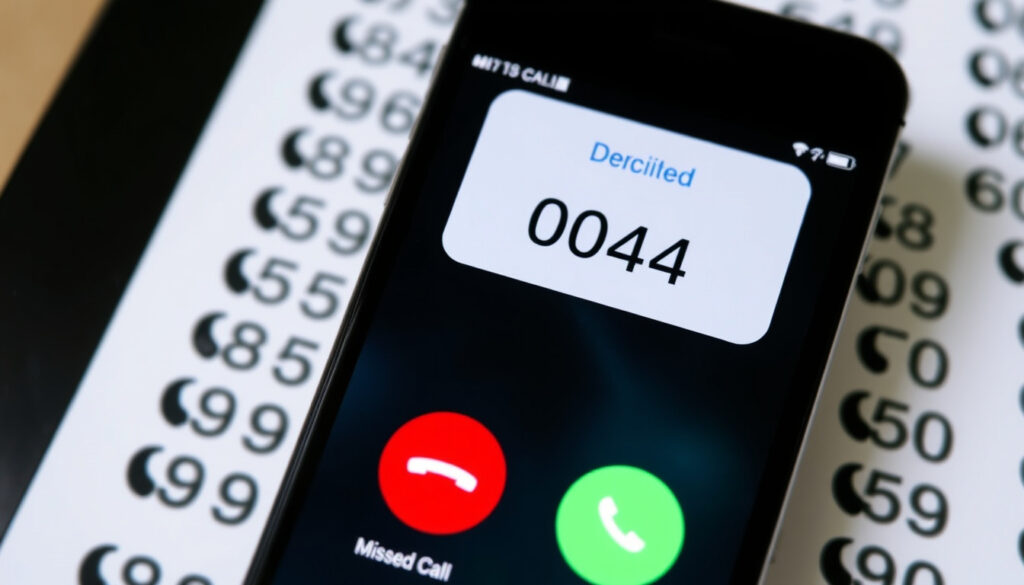
0044 Number Keeps Calling? Why & How to Block It
If your phone has been ringing with a call from 0044 and you don’t know anyone in the UK, you’re not alone. Thousands of people in Ireland are reporting repeated calls from numbers starting with +44, and many are wondering who is on the other end — and how to make it stop. On December 12, 2025, the Irish Times reported a surge in such scam calls, prompting fresh warnings from the national regulator. This article explains why you’re being targeted, how to identify scam numbers, and the exact steps to block them for good.
Date of latest warning: December 12, 2025 (Irish Times) ·
Source of advice: ComReg, Irish Times, The Journal ·
Common recommendation: Do not answer unknown +44 calls
Quick snapshot
- Scammers spoof +44 numbers to appear legitimate (ComReg – Irish regulator)
- Answering can lead to your number being added to a scammer database (The Irish Times – established newspaper)
- ComReg advises blocking and reporting persistent scam calls (ComReg – Irish regulator)
- Who exactly is behind the calls (often criminal networks) (RCPSA – consumer protection body)
- Whether all +44 calls are scams – some may be legitimate (ITU – international telecom authority)
- Effectiveness of reverse lookup services for scam numbers (Reddit Ireland – community forum)
- December 12, 2025: Irish Times and ComReg issue fresh warning about +44 scam calls targeting Ireland (The Irish Times)
- ComReg continues network‑based interventions to reduce harm (ComReg – Nuisance Communications Update)
- Irish carriers are expected to implement more aggressive blocking of spoofed numbers (Ibec / SFA – business lobby summary)
| Label | Value |
|---|---|
| Country code | +44 / 0044 (UK) |
| Common scam type | Missed call or automated voice |
| Regulator in Ireland | ComReg |
| Action if called | Do not answer, block, report |
The implication: these calls follow a predictable pattern, and knowing the basics helps you respond without hesitation.
Who is calling from 0044?
The prefix 0044 (or +44) is the international dialling code for the United Kingdom, assigned by the International Telecommunication Union (ITU – global telecom standards body). But the person calling from that number is unlikely to be a UK resident. Scammers spoof caller ID to make it look like a real British number – often showing city names like “Bristol” or “Birmingham” (Reddit Ireland – community forum).
How to find out who called you
Several reverse phone lookup services such as Truecaller and Spokeo claim to identify unknown callers. Some offer free basic lookups, while others require a paid subscription. However, as ComReg warns, scammers frequently spoof numbers, so a lookup result may show a legitimate UK subscriber who has nothing to do with the scam (ComReg – Irish regulator).
Reverse lookups work best for static landlines, not spoofed numbers. A scammer can present any fake caller ID, so trusting a lookup result can give you a false sense of security.
Using reverse phone lookup services
Services like Truecaller, Spokeo, and Whitepages can sometimes reveal the geographic area or carrier. But for scam numbers, the most reliable information comes from community reports – for example, Reddit threads where multiple users flag the same +44 number as fraudulent (Reddit Ireland – community forum).
Checking online databases
There is no single authoritative public database that lists all scam callers. The Irish regulator ComReg collects reports, but does not publish a real‑time blacklist. The UK’s Ofcom and Action Fraud maintain some scam‑number registers, but their coverage is limited (UK Government – phone scams advice). The implication: don’t rely on any single source to identify a caller.
Why am I getting calls from +44?
Scammers target Irish phone numbers because the +44 prefix looks familiar and legitimate – many people in Ireland have friends, family, or business contacts in the UK. Once you answer, even for a second, the scammer knows your line is active. According to the Irish Times, your number can then be added to a buy‑and‑sell database used by other criminal networks (The Irish Times – December 2025 report).
Common scam types using +44 numbers
- Missed call (or “wangiri”) – the phone rings once and stops. If you call back, you’re charged a premium rate (The Journal – Irish news site).
- Automated voice – a recorded message claims to be from your bank, HMRC, or tech support, urging you to call back or provide personal details (ComReg – Irish regulator).
- Live scammer – a person speaks, often with a British accent, pretending to be from your mobile carrier or a security team, and tries to extract banking information (The Journal).
Why scammers target Irish residents
Over 90% of adults in Ireland received a scam call to their mobile phone in a late‑2022 survey (Ennis Chamber – summarising ComReg data). The high penetration of smartphones and widespread use of online banking make Ireland an attractive target. Furthermore, Irish telecom networks have been slower than some European neighbours to implement automated call‑blocking for spoofed international numbers, as noted in a 2023 ComReg consultation response (ComReg – Consultation Response, April 2024).
Are all +44 calls scams?
No. Legitimate calls from UK numbers exist – if you know someone in the UK or have a British business contact, a call from +44 might be genuine. But if you don’t recognise the number and haven’t expected a UK call, treat it as suspicious. The Irish Times advice is clear: if you don’t know the person, let it go to voicemail (The Irish Times).
A 2024 ComReg consultation noted that network‑based interventions are being designed to block spoofed international calls before they reach your phone, but full deployment is still ongoing. In the meantime, you are your own first line of defence.
| Type | How it works | Risk level |
|---|---|---|
| Wangiri (missed call) | One ring, you call back, charged premium rate | Financial loss via call charges |
| Automated voice | Recorded message urging callback or info | Identity theft, financial fraud |
| Live scammer | Pretends to be tech support, bank, etc. | Direct theft, malware installation |
The pattern is clear: every type relies on you answering or calling back.
How do you check if a phone number belongs to a scammer?
You can’t always be certain, but there are reliable red flags. ComReg lists automated messages, urgency, and requests for personal information as classic signs of a scam (ComReg – Irish regulator). Cross‑check the number against community reports on Reddit or scam‑tracking websites. The Journal also maintains an updated list of known scam numbers reported by readers (The Journal).
Red flags to look for
- Automated or robotic voice – legitimate organisations do not use recorded messages for urgent matters.
- Urgent demands for payment, password reset, or personal information.
- Number shows as “International” or “+44” when you have no UK connections.
- Caller refuses to provide a verifiable reference or callback number.
Using official resources like ComReg
ComReg’s website offers a dedicated scam‑call advice page and an email address (scamcalls@comreg.ie) to report incidents. They also publish periodic nuisance communications updates (ComReg – Nuisance Communications Update, September 2025). You can also contact your service provider directly – ComReg advises requesting a block of the number at the network level (ComReg – Scam Calls & Texts).
What to do if you suspect a scam
Do not answer. Do not call back. Do not provide any personal or financial information. Report the number to ComReg via your mobile operator. The Journal also encourages readers to send details to their newsroom to help publicise active scams (The Journal).
A single answered call can label your number as active and lead to a cascade of further scam attempts. The Irish Times reports that scammers sell verified numbers to other criminals – so the best protection is prevention.
Can I block them?
Yes – and you should. Blocking a scam number on your phone is quick, but carrier‑level blocking is more effective against spoofed calls. Here’s how to do both.
How to block numbers on iPhone
- Open the Phone app and tap Recents.
- Tap the blue i icon next to the +44 number.
- Scroll down and tap Block this Caller.
- Confirm Block Contact.
How to block numbers on Samsung (Android)
- Open the Phone app and go to Recents.
- Tap the number to expand its details.
- Tap the three dots (menu) and select Block number.
- Alternatively, go to Settings → Call settings → Block numbers and add the +44 prefix manually.
Using carrier blocking services
Most Irish mobile operators can block specific numbers or international prefixes upon request. ComReg explicitly advises: “If you are getting persistent scam calls from a number, contact your service provider, and request the number be blocked” (ComReg – Scam Calls & Texts).
Reporting to ComReg
You can forward details of scam calls to ComReg via their website or by email. They use this data to inform network‑level blocks. As of September 2025, ComReg is actively rolling out anti‑scam interventions based on intelligence sharing between telecom providers (ComReg – Nuisance Communications PDF, 2025).
What are the five area codes you should never answer?
International area codes that are frequently abused by scammers include +44 (UK), +232 (Sierra Leone), +284 (British Virgin Islands), +473 (Grenada), and +876 (Jamaica). These prefixes appear in “wangiri” missed‑call scams and automated voicemail frauds (ComReg – Irish regulator).
List of suspicious area codes
- +44 (UK) – most common in current Irish scam wave.
- +232 (Sierra Leone) – known for premium‑rate callback scams.
- +284 (British Virgin Islands) – frequently spoofed, high premium rates.
- +473 (Grenada) – same pattern: one ring then hang up.
- +876 (Jamaica) – another top source of wangiri calls.
Why these area codes are risky
These countries have premium‑rate numbers that generate revenue for scammers when you call back. The scam is simple: they ring once, you return the call, and you’re charged a high per‑minute fee that the scammer shares with the telecom operator in that country. ComReg’s guidance has warned about these prefixes since at least 2017 (ComReg – Scam Calls & Texts).
General advice for answering unknown calls
If the number is not in your contacts and you are not expecting a call from that country, let it go to voicemail. A legitimate caller will leave a message. The Journal’s reporting echoes this: “if you don’t know the person, don’t answer” (The Journal).
Blocking entire country codes, like +44, means you might miss a genuine call from a UK contact. But the risk of fraud far outweighs that inconvenience.
Timeline of events
Scam calls using spoofed +44 numbers have been a persistent problem in Ireland for years, but recent media coverage and regulatory action have intensified.
| Date | Event |
|---|---|
| 2017-09-29 | ComReg first publishes guidance on scam calls (ComReg) |
| 2023 | Survey shows 90%+ of Irish adults received scam calls on mobile (Ennis Chamber / ComReg) |
| 2024-04-03 | ComReg publishes consultation response on network‑based interventions (ComReg) |
| 2025-09-18 | ComReg publishes Nuisance Communications Update (ComReg) |
| 2025-12-12 | Irish Times reports surge in +44 scam calls, issues warning (The Irish Times) |
The pattern: each year brings more sophisticated scams, but also stronger regulatory response.
Clarity: what we know for sure, and what remains unclear
Confirmed facts
- Scammers spoof +44 numbers to trick Irish residents (ComReg)
- Answering a call can lead to your number being sold or added to a database (The Irish Times)
- ComReg advises blocking and reporting without engaging (ComReg)
- Network‑based interventions are being implemented by ComReg (ComReg – Update 2025)
What’s unclear
- Which specific criminal networks are behind the calls (RCPSA)
- Whether every +44 call is a scam – some may be legitimate (ITU)
- How quickly carrier‑level blocking will be fully deployed across all Irish networks (Ibec / SFA)
- Effectiveness of reverse lookup services for identifying scammers (Reddit Ireland)
What the experts say
“Just by answering one of the +44 phone calls, it is possible that a scammer may add your number to a database, or sell it on to another criminal.”
— The Irish Times, December 2025 report (Source)
“If you are getting persistent scam calls from a number, contact your service provider, and request the number be blocked.”
— ComReg, official scam call guidance (Source)
The message from both the regulator and the newsroom is consistent: do not engage, block immediately, and report. The risk of financial loss or identity theft is too high to gamble on a single answered call.
For Irish residents, the choice is clear: let unknown +44 calls go to voicemail. Block the number on your device and contact your mobile operator to block it at the network level. Report the incident to ComReg so they can add it to their intelligence. A few seconds of caution now can save hours of hassle and potential fraud later. The Irish Times warns that answering even once can put your number on a scammer list.
Related reading: **Social Welfare Phone Number Ireland** · **An Post Car Insurance Phone Number**
facebook.com, reddit.com, reddit.com, comreg.ie, instagram.com, youtube.com, rcpsa.ie
If you’re receiving persistent calls from unfamiliar numbers, a guide on identifying unknown callers can help you identify and block them effectively.
Frequently asked questions
Is it safe to call back a +44 number?
No. If you do not recognise the number, calling back could trigger premium‑rate charges or confirm your number is active. ComReg advises never to call back unknown international numbers.
What should I do if I accidentally answered a 0044 call?
Hang up immediately. Do not provide any information. Monitor your accounts for unusual activity. If you shared personal details, contact your bank and report it to the Gardaí via the fraud unit (Garda Fraud Unit).
Can I trace the caller from a 0044 number?
Usually not. Spoofing technology hides the real origin. Reverse lookup services may show a spoofed identity. The only reliable tracing is done by telecom operators and law enforcement, and even then it is difficult.
Do scam calls come from real UK phone numbers?
Sometimes. Scammers can spoof any UK number, including real ones belonging to innocent people. That is why recognising the prefix alone is not enough – always consider the context.
How do I report a scam call to ComReg?
Email the details (number, time, description) to scamcalls@comreg.ie or use the contact form on the ComReg website (ComReg – Scam Calls & Texts).
Will blocking a number stop all calls from that area?
Blocking a specific number stops that one source. But scammers change numbers constantly. For broader protection, ask your carrier to block the entire +44 prefix if you do not need UK calls.
Are there any numbers that are definitely safe to answer from +44?
Only those you have explicitly expected – for example, a UK business you have contacted or a family member who uses a UK number. When in doubt, let it ring.
More related posts
 Local SEO Companies Dublin: Reviews & Pricing 2025
 Cast of The Life List: Full List of Actors and Characters
 Best Shows on Netflix: Top 10 by IMDb & Rotten Tomatoes
 Skoda Kamiq for Sale: Worth Buying in Ireland
 Places to Visit in Dublin for Free: Top Attractions
 PSG vs Inter Milan Lineups: Official Starting XI
 Saravanaa Bhavan Tallaght Menu 2025: Prices, Dishes & Delivery
 Greek Goddess of Fertility: Roles, Symbols Explained
