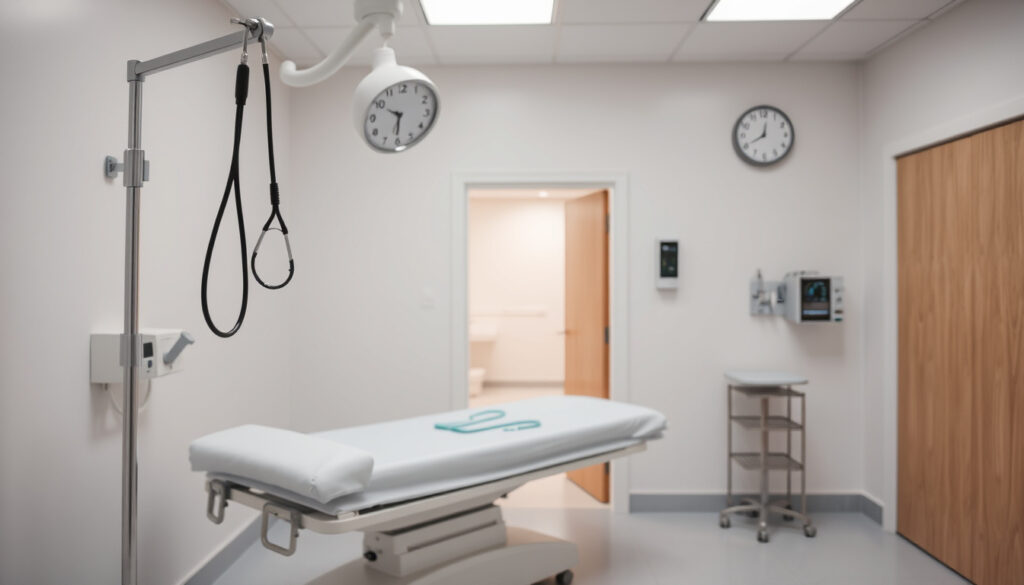
How Long Does a Colonoscopy Take? Procedure Time, Recovery & More
If you’re scheduled for a colonoscopy, you’re probably wondering how long the whole process takes. The procedure itself is quick — typically 30 to 45 minutes — but the full timeline includes preparation, recovery, and the lingering effects of sedation. Here’s a clear breakdown of what to expect from start to finish, backed by health authorities.
Procedure duration: 30–45 minutes ·
Total hospital time: 2–3 hours ·
Recovery time: 30–60 minutes ·
Sedation residual effect: Up to 24 hours ·
Bowel prep duration: 4–6 hours on prep day
Quick snapshot
- Procedure takes 30–45 minutes (NHS)
- Total hospital time 2–3 hours (MD Anderson Cancer Center)
- Recovery observation 30–60 minutes (Mayo Clinic)
- Sedation effects last up to 24 hours (Bowel Cancer Australia)
- Exactly how long sedation affects each person varies
- Gender differences in difficulty are anecdotal
- Exact time if polyps are removed depends on number and size
- Prep begins evening before (Mayo Clinic)
- Procedure 30–45 minutes (NHS)
- Recovery 30–60 minutes (Mayo Clinic)
- Rest of day at home (Mayo Clinic)
- Resume normal diet gradually (Mayo Clinic)
- No driving or heavy machinery for 24 hours (Mayo Clinic)
- Arrange a ride home (Mayo Clinic)
- Rest for the remainder of the day (Mayo Clinic)
Five key facts, one pattern: the colonoscopy timeline is shorter than most people fear, but the sedation window is longer than most expect.
| Fact | Value | Source |
|---|---|---|
| Average procedure time | 30 minutes | Cleveland Clinic |
| Procedure time range | 30–45 minutes | NHS |
| Total hospital time | 2–3 hours | MD Anderson Cancer Center |
| Recovery room time | 30–60 minutes | NHS |
| Sedation effect duration | Up to 24 hours | Bowel Cancer Australia |
| Bowel prep work duration | 2–4 hours after starting | Mayo Clinic |
How long does a colonoscopy take including recovery?
How long does the actual procedure take?
- The colonoscopy itself usually lasts 30 to 45 minutes (NHS).
- If polyps are found and removed, the procedure may take a few extra minutes (Mayo Clinic).
- Combined colonoscopy and endoscopy can take 45–60 minutes total.
How long is recovery after a colonoscopy?
- You’ll be monitored in a recovery area for about 30 to 60 minutes (Mayo Clinic).
- Some UK trusts advise waiting at least 1 hour after sedation before discharge (Guy’s and St Thomas’ NHS Foundation Trust).
- In Australia, observation may last up to two hours (Bowel Cancer Australia).
What factors can affect the total time?
- Bowel prep quality: if the colon is not clean, the doctor may need to repeat the scope or abort the exam.
- Polypectomy: removing multiple polyps adds time.
- Sedation depth: deeper sedation may require longer recovery.
- Facility workflow: busy centers may have longer wait times before and after.
Most patients can expect to be in and out of the hospital in under three hours, but the sedation after-effects mean you won’t be back to normal until the next day. The procedure itself is the shortest part of the timeline.
What is the most painful part of a colonoscopy?
Is the insertion of the scope painful?
- Most patients report mild discomfort during initial insertion of the colonoscope (Bupa UK).
- Air insufflation to expand the colon can cause cramping or bloating.
- Sedation significantly reduces pain perception.
Does polyp removal cause pain?
- Biopsy or polyp removal may cause a brief pinch or mild cramping (Mayo Clinic).
- Patients under sedation usually do not feel it.
What about post-procedure discomfort?
- Bloating and gas are common but usually settle within a few hours (Bupa UK).
- Mild cramping can last a day.
- Serious pain is rare (less than 1 in 1000) (Cancer Research UK).
The discomfort is real but short-lived: insertion and post-procedure gas are the two peaks, and both are manageable with sedation and time. The real challenge is the prep, not the scope itself.
How long are you put to sleep for a colonoscopy?
What kind of sedation is used?
- Most patients receive moderate sedation (conscious sedation) or deep sedation via propofol (American Society of Anesthesiologists).
- General anesthesia is rarely used.
How long does the sedation last?
- You are sedated just before the procedure and remain under for the full 30–45 minutes.
- Initial recovery (waking up) takes about 30 minutes after IV removal (ASAHQ).
- Sedation can affect judgment and coordination for up to 24 hours (Royal Devon NHS Foundation Trust).
What are the after-effects of sedation?
- Drowsiness, tiredness, and impaired coordination (Bupa UK).
- You must not drive, operate machinery, or make important decisions for 24 hours.
- A responsible adult should stay with you for 12–24 hours (North Tees and Hartlepool NHS Foundation Trust).
The sedation is short-acting, but its effects linger far longer than most people realise. The 24-hour restriction is not a precaution — it’s based on how long the drug remains in your system.
Is a colonoscopy minor or major surgery?
Why is a colonoscopy considered minor surgery?
- Colonoscopy is classified as minor surgery because it is an outpatient procedure with no large incisions (CDC).
- It is performed with a flexible scope through the rectum.
- Recovery is rapid and most people return to normal activities the next day (Mayo Clinic).
What are the risks of colonoscopy?
- Serious complications like perforation or bleeding occur in less than 1 in 1000 cases (Cancer Research UK).
- Risks are higher if polyps are removed, but still very low.
- Most side effects are mild (bloating, cramping).
The takeaway: colonoscopy is a routine screening procedure, not a major operation. The risk profile is extremely low, which is why it’s done on an outpatient basis.
Will I be on the toilet all night with colonoscopy prep?
When does the prep start?
- Bowel prep usually begins the evening before the procedure (Mayo Clinic).
- Some regimens split the dose: half the night before, half the morning of the exam.
- You will be on a clear liquid diet all day before.
How long does the bathroom activity last?
- After taking the prep solution, bowel movements typically start within 1–2 hours and last for 2–4 hours (Mayo Clinic).
- It is not all night — most people are done with the active phase within a few hours.
- You may have occasional trips to the toilet until the colon is clear.
Tips to manage the prep
- Stay near a toilet and use wet wipes to prevent irritation.
- Drink plenty of clear fluids to stay hydrated.
- Chill the prep solution to make it taste better.
The pattern: the prep is the most uncomfortable part of the colonoscopy journey, but it’s also the shortest. The actual bathroom phase is intense but limited to a few hours.
Colonoscopy timeline: from prep to recovery
- Day before procedure: Begin clear liquid diet and start bowel prep in the evening.
- Morning of procedure: Finish bowel prep; travel to hospital 1–2 hours before appointment.
- During procedure: Colonoscopy takes 30–45 minutes under sedation.
- Immediate after: Recovery in observation area for 30–60 minutes.
- Rest of day: Rest at home; no driving or heavy work.
The implication: the entire colonoscopy experience spans about 24 hours from the start of prep to the end of the sedation window, but the active medical procedure is only a small fraction of that time.
Clarity: what we know and what we don’t
Confirmed facts
- Procedure takes 30–45 minutes
- Total hospital time 2–3 hours
- You cannot drive after sedation
- Bowel prep is required
What’s unclear
- Exactly how long sedation affects each person varies
- Gender differences in difficulty are anecdotal
- Exact time if polyps are removed depends on number and size
Expert perspectives
“From the time you arrive at the hospital until the time you leave, it’s usually between two-and-a-half and three hours.”
— Dr. Ibrahim Alasadi, MD Anderson Cancer Center
“It should take 30 to 45 minutes to have your colonoscopy.”
— NHS
“The examination generally takes less than half an hour, but the sedative can stay in the blood for up to 24 hours.”
— Bowel Cancer Australia
For patients in the UK, the implication is clear: arrange for a responsible adult to stay with you for 24 hours after sedation, as advised by North Tees and Hartlepool NHS Foundation Trust, or risk complications from impaired judgment. The colonoscopy itself is a brief, low-risk procedure, but the preparation and recovery require careful planning.
colorectalcancer.org, honcology.com, mdanderson.org, bedfordshirehospitals.nhs.uk, colorectalcancer.org
Patients often wonder about the procedure’s timeline, but understanding what a colonoscopy involves can also help alleviate anxiety.
Frequently asked questions
Why do I need a colonoscopy?
Colonoscopy is the gold standard for colorectal cancer screening. It allows doctors to detect and remove polyps before they become cancerous (CDC).
How often should I get a colonoscopy?
Most people should start screening at age 45 and repeat every 10 years if results are normal. Those with higher risk may need more frequent exams (American Cancer Society).
Can I eat before a colonoscopy?
No. You must follow a clear liquid diet the day before the procedure and nothing by mouth for several hours before the exam (Mayo Clinic).
What should I wear to a colonoscopy?
Wear loose, comfortable clothing and leave valuables at home. You will change into a hospital gown (NHS).
Is it normal to have blood after a colonoscopy?
Small amounts of blood in the stool or on toilet paper can be normal, especially after polyp removal. Heavy bleeding requires immediate medical attention (Mayo Clinic).
Can I go back to work the next day?
Most people can return to work the day after a colonoscopy, provided they feel well and their job does not involve driving or heavy machinery (Mayo Clinic).
Related reading
More related posts
 South Africa vs Nigeria: World Cup Qualifier & Country Comparison
 Most Successful English Club: Liverpool’s 70 Trophies Lead
 Robert Sheehan Movies and TV Shows: Full Filmography
 50+ Free Peppa Pig Colouring Pages (Printable PDFs)
 Error: Definition, Types, and Synonyms
 West Ham vs Tottenham Standings: H2H, Results & Table
 Speed Test – Understand Internet Performance Better
 Irish Passport Renewal for a Child: Cost, Documents, and Steps
