Foods to Lower Cholesterol: Science-Backed Guide
If you’ve ever stared at a bowl of oatmeal wondering if it’s really making a difference, you’re not alone. Nearly 94 million U.S. adults have high cholesterol, and the food choices we make daily can shift that number. This guide cuts through the noise to show which foods actually lower LDL cholesterol, backed by the latest research from top health organizations.
U.S. adults with high cholesterol: 94 million (total cholesterol >200 mg/dL) ·
LDL reduction from 5g soluble fiber daily: 5–10% ·
Heart disease risk reduction per 1 mmol/L LDL drop: 22% ·
Recommended daily fiber intake: 25–30 g
Quick snapshot
- Soluble fiber reduces LDL cholesterol (American Heart Association)
- Replacing saturated fats with unsaturated fats lowers LDL (American Heart Association)
- Trans fats increase cardiovascular risk (NCBI Bookshelf)
- How dietary cholesterol (from eggs) affects blood cholesterol varies by individual genetics (Mayo Clinic)
- Long-term LDL benefits of specific drinks like green tea need larger clinical studies (Harvard Health)
- Soluble fiber from oats binds cholesterol during digestion, an immediate per-meal effect (Harvard Health)
- Build meals around fiber-rich whole grains and produce (Heart Foundation Australia)
- Include plant sterols and omega‑3s from fish and nuts (MedlinePlus)
Key numbers show where the evidence points strongest.
| Label | Value |
|---|---|
| Daily soluble fiber target for cholesterol reduction | 5–10 g |
| LDL reduction from plant sterols (2 g/day) | 8–10% |
| Nuts serving size for cholesterol benefit | 1 ounce (28 g) per day |
| 2 servings | |
| Replace saturated with unsaturated fat | Lowers LDL (American Heart Association) |
| Trans fats | Increase cardiovascular risk (NCBI) |
| Portfolio diet – viscous fiber target | ≥10 g/day (NCBI) |
| Portfolio diet – plant sterol target | ~2 g/day (NCBI) |
| Total daily soluble fiber recommendation | 10–25 g (MedlinePlus) |
What foods help lower cholesterol quickly?
Fast-acting foods work through immediate mechanisms like bile acid binding or fat displacement. The top four, backed by clinical evidence, are listed below.
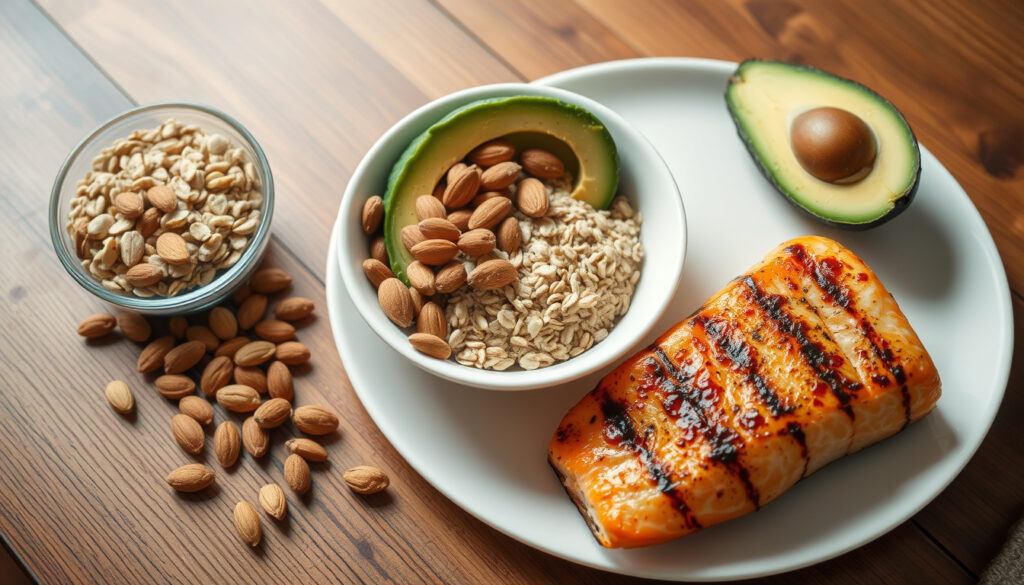
Oats and barley
- Soluble fiber beta‑glucan binds cholesterol in the digestive tract and removes it before entering the bloodstream (Harvard Health).
- Just 3 g of beta‑glucan per day (one bowl of oats) can lower LDL by 5–10% (MedlinePlus).
The effect kicks in with the first meal, no waiting weeks for results.
Fatty fish
- Omega‑3 fatty acids (EPA/DHA) reduce triglycerides and may slightly lower LDL (American Heart Association).
- Two servings of salmon, mackerel, or tuna per week meet the recommendation (MedlinePlus).
The trade‑off: fish doesn’t lower LDL dramatically, but it improves the overall lipid profile.
Nuts (almonds, walnuts)
- Unsaturated fats and plant sterols in nuts block cholesterol absorption (Heart Foundation Australia).
- One ounce (28 g) per day is enough to see LDL reduction (Harvard Health).
Avocados
- Rich in monounsaturated fat and both soluble and insoluble fiber (Harvard Health).
- Replacing a saturated‑fat source with half an avocado can lower LDL by 8–13% (American Heart Association).
The pattern: immediate‑effect foods share one trait, they interfere with cholesterol reabsorption or shift fat composition in the gut. No single food is magic; consistency across meals matters.
What Are Some Recommended Drinks to Lower Cholesterol?
Beverages can complement a solid diet but should not replace whole foods. These four show the strongest supporting data.
Green tea
- Catechins in green tea reduce LDL oxidation and may lower total cholesterol (Harvard Health).
- Drinking 2–3 cups per day is the typical dose in studies (NCBI Bookshelf).
Soy milk
- Isoflavones in soy modestly lower LDL (Heart Foundation Australia).
- Replace dairy milk with unsweetened soy milk to reduce saturated fat intake at the same time.
Pomegranate juice
- Antioxidants in unsweetened pomegranate juice may improve the cholesterol profile (Mayo Clinic).
- Keep portions small (4 oz) to avoid excess sugar.
Tomato juice
- Lycopene and other phytochemicals are linked to lower LDL (American Heart Association).
- Choose low‑sodium versions.
What this means: drinks play a supporting role. The biggest wins come from removing sugary and high‑fat beverages rather than relying on any single super-drink.
What foods are worst for high cholesterol?
The foods that raise LDL most aggressively are those high in saturated fat, trans fat, and refined starch.
Red and processed meats
- Saturated fat in beef, pork, and lamb raises LDL cholesterol (American Heart Association).
- Limit red meat to 1–3 times per week (Heart Foundation Australia).
- Processed meats (bacon, sausage) add sodium and preservatives that harm heart health.
Full‑fat dairy products
- Butter, cream, and whole milk are dense sources of saturated fat (MedlinePlus).
- Switching to low‑fat or non‑dairy alternatives reduces saturated fat intake immediately.
Fried and fast foods
- Oil absorption during frying increases dietary saturated and trans fats (NCBI Bookshelf).
- Fast food meals often combine high fat with refined carbs, worsening the lipid profile.
Baked goods with trans fats
- Partially hydrogenated oils both raise LDL and lower HDL (American Heart Association).
- Even small amounts (2 g per day) significantly increase cardiovascular risk.
The trade‑off: processed convenience foods save time but cost heart health. Swapping one fast‑food meal per week for a home‑cooked legume‑based meal can reduce LDL by 3–5%.
What is the best breakfast for high cholesterol?
Breakfast sets the metabolic tone for the day. The ideal morning meal combines soluble fiber, healthy fats, and antioxidants.
Oatmeal topped with berries and nuts
- Oats deliver beta‑glucan that actively reduces LDL (Harvard Health).
- Berries add antioxidants that protect LDL from oxidation (American Heart Association).
- Walnuts or almonds provide unsaturated fats and plant sterols.
Whole‑grain toast with avocado
- Avocado’s monounsaturated fat improves HDL/LDL ratio (Harvard Health).
- Whole‑grain bread adds fiber and has a lower glycemic impact than white bread.
Smoothie with spinach, oats, and soy milk
- Spinach adds lutein and fiber; oats contribute beta‑glucan; soy milk provides isoflavones (Heart Foundation Australia).
- Blending preserves fiber, unlike juicing.
Scrambled egg whites with vegetables (optional yolk)
- Egg whites contain no cholesterol and are a safe protein source (Mayo Clinic).
- For individuals who are not hyper‑responders, one whole egg per day is unlikely to raise LDL.
The catch: the best breakfast is the one you can stick with daily. Oatmeal wins on evidence, but a balanced smoothie or avocado toast also works if it keeps you away from bacon and butter.
Should I eat eggs if I have high cholesterol?
The egg debate is the most persistent cholesterol myth. Here’s what the data actually shows.
What research says about egg yolks and cholesterol
- For most people, dietary cholesterol in eggs has minimal effect on blood cholesterol compared with saturated fat intake (Mayo Clinic).
- A large egg contains about 186 mg of cholesterol, but saturated fat (1.6 g) is the bigger concern.
Moderation and individual response
- Hyper‑responders (about 1 in 4 people) may see LDL increase when eating eggs regularly (Harvard Health).
- Genetic factors like APOE4 status influence how dietary cholesterol is processed.
Alternatives (egg whites, plant‑based substitutes)
- Egg whites contain zero cholesterol and are a safe alternative for strict restriction (Mayo Clinic).
- Scrambled tofu or chickpea flour omelets provide protein without any cholesterol.
For the average person with high cholesterol, one egg per day is not a problem. The problem is the butter, cheese, and bacon that usually accompany it. If you are hyper‑responsive or have genetic risk, skip the yolk and use egg whites or plant‑based options.
Upsides
- Focusing on fiber‑rich foods improves LDL significantly (5–10% reduction from oats alone).
- Dietary changes are drug‑free and can be combined with statins for additive benefit.
- Foods like nuts, fish, and avocados also provide vitamins, minerals, and anti‑inflammatory compounds.
- Many cholesterol‑lowering foods (beans, oats, vegetables) are inexpensive and widely available.
Downsides
- Individual responses vary – what works for one person may not work for another.
- Relying on single foods (e.g., oatmeal) without reducing saturated fat yields limited results.
- Some “functional” foods enriched with sterols/stanols can be expensive and may not be covered by insurance.
- Significant LDL reduction (≥20%) usually requires combining multiple dietary shifts plus lifestyle changes.
Step‑by‑step: Building a cholesterol‑lowering diet
These four steps create a science‑backed eating pattern that targets LDL from multiple angles.
- Increase soluble fiber to 10–25 g per day. Source: oats, barley, beans lentils, apples oranges, eggplant (MedlinePlus).
- Include plant sterols or stanols (2 g/day). Use fortified margarine orange juice or supplements (Mayo Clinic).
- Replace saturated fats with unsaturated fats. Cook with olive or canola oil; snack on nuts and seeds; eat avocado (American Heart Association).
- Choose lean protein sources. Prioritize fish poultry without skin legumes and soy (Heart Foundation Australia). Limit red meat to 1–3 times per week.
Why this matters: each step adds 3–8% LDL reduction; combined, they can lower LDL by 20–30% – comparable to a low‑dose statin, without the medication side effects.
Confirmed facts
- Soluble fiber reduces LDL cholesterol.
- Replacing saturated fats with unsaturated fats lowers LDL.
- Trans fats increase cardiovascular risk.
- Plant sterols and stanols (2 g/day) lower LDL by 8–10%.
What’s unclear
- Exact impact of dietary cholesterol (e.g., eggs) varies by individual genetics.
- Long‑term effectiveness of specific drinks (green tea pomegranate juice) needs larger studies.
“Soluble fiber in oatmeal binds cholesterol and helps remove it from the body before it enters the bloodstream.”
— Mayo Clinic nutritionist via Mayo Clinic
“Six foods – oats nuts unsaturated fats fruit and veg barley and soya – are the real cholesterol busters when eaten consistently.”
— Heart UK dietitian via Heart UK
For the 94 million Americans managing high cholesterol the choice is clear: build every meal around fiber unsaturated fats and plant protein, or keep riding the statin escalation curve. This matters because foods like oats beans nuts and fish are not fads; they are the closest thing to dietary medicine we have.
Related reading: **Irish Soda Bread Recipe** · **Half Marathon Training Plan**
massgeneralbrigham.org, cls.health, pmc.ncbi.nlm.nih.gov, heart.org, sciencedirect.com, youtube.com
Frequently asked questions
Can drinking green tea lower cholesterol?
Green tea catechins may reduce LDL oxidation and modestly lower total cholesterol. Most studies show a small benefit with 2–3 cups per day (Harvard Health). The effect is not as strong as dietary fiber or plant sterols.
Is coconut oil bad for high cholesterol?
Coconut oil is about 90% saturated fat which raises LDL cholesterol more than olive oil or canola oil (American Heart Association). Use it sparingly.
How much oatmeal should I eat daily to lower cholesterol?
Three grams of beta-glucan per day – roughly one cup of cooked oatmeal – is enough to lower LDL by 5–10% (MedlinePlus).
Does exercise help lower cholesterol?
Yes. Physical activity can raise HDL and modestly lower LDL especially when combined with dietary changes. The AHA recommends 150 minutes of moderate exercise per week (American Heart Association).
What is the difference between LDL and HDL cholesterol?
LDL (low-density lipoprotein) carries cholesterol to tissues and can build up in arteries; it is called “bad” cholesterol. HDL (high-density lipoprotein) carries cholesterol away from arteries to the liver for elimination; it is called “good” cholesterol (MedlinePlus).
Can supplementing with red yeast rice lower cholesterol?
Red yeast rice contains naturally occurring lovastatin and can lower LDL. However the amount of active compound varies by product and quality control is inconsistent (Mayo Clinic). Consult a doctor before use.
More related posts
 State Pension Tax 2027: Proposed Changes and Exemptions in Ireland
 Cast of Scream 7 – Returning Stars and New Faces
 Convert Pound to Euro: GBP to EUR Exchange Rate & Calculator
 Diary of a Wimpy Kid Costume: DIY Guide & Printable Masks
 Places to Visit in Dublin for Free: Top Attractions
 La Liga Standings 2025-26: Current Table, Champions, History
 Killarney to Tralee Bus: Timetable, Fare & Route Guide (2025)
 Vodafone My Bill Login: Ireland Bills Access Guide
