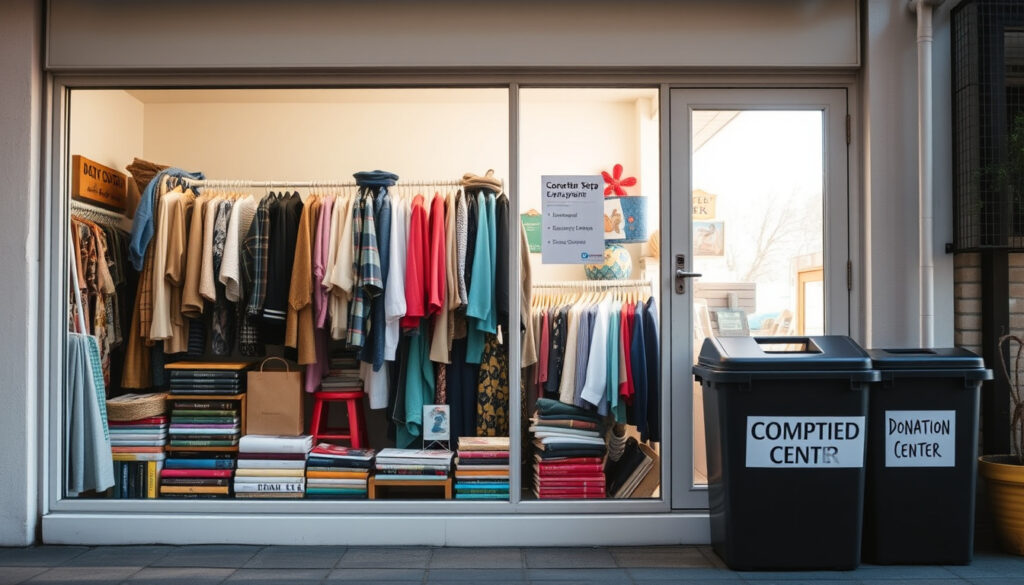
Charity Shop Near Me: Find Local Donation Centre
There’s something quietly satisfying about finding a good charity shop—the thrill of a hidden gem, the knowledge that your money goes to a good cause, and the feeling of giving pre-loved items a second life. If you’re searching for charity shops near me in Ireland, you’re in luck: the country is dotted with well-run networks that accept clothes, books, furniture and more. We walk you through the largest operators, what they take (and don’t), and how to make your donation count.
SVP charity shops in Ireland over 230 ·
Items on prohibited list 30 ·
Top 10 charity shops in Dublin (Yelp) 10
Quick snapshot
- SVP operates over 230 Vincent’s shops in every Irish county (Society of St. Vincent de Paul (SVP) – Ireland’s largest charity shop operator)
- Oxfam Ireland has donation banks for clothes and books across the country (Oxfam Ireland – international development charity with local shops)
- Barnardos Ireland asks for gently used, washed clothing (Barnardos Ireland – children’s charity running charity shops)
- Exact number of Sue Ryder shops in Ireland (varies by region)
- Which specific items are banned across all shop networks – rules differ
- Whether all SVP food voucher programmes are available in every county (contact local office)
- Oxfam Ireland shops have been operating for over six decades (Oxfam Ireland)
- Current top charity shop networks in Ireland established and growing (2024) (Oxfam Ireland)
- More shops may offer online donation booking and collection services
- Expansion of drop-off bins for 24/7 donations
Five key facts summarise the Irish charity-shop landscape at a glance.
| Metric | Value |
|---|---|
| St. Vincent de Paul shops | 230+ |
| Enable Ireland locations | 4 (listed) |
| Sue Ryder shops | Multiple across Ireland |
| Items not to donate | 30 (based on common list) |
| Top food bank item | Canned goods |
What cannot be donated to charity shops?
Not everything you clear out of your wardrobe belongs on a charity-shop shelf. Knowing the prohibited list saves you a wasted trip and saves volunteers from extra sorting.
Commonly refused items
- Old knickers – “Old knickers are not accepted in clothes banks,” warns the Society of St. Vincent de Paul (SVP, Ireland’s largest charity shop network). Underwear must be new or in pristine condition.
- Damaged or soiled items – Fabric of Change (Irish sustainable fashion initiative) says only clean, undamaged, wearable clothing should be donated.
- Electricals without PAT testing – Many shops require portable appliance testing before accepting electronics, and many refuse them outright.
- Furniture without prior arrangement – SVP says selected stores accept second-hand furniture, but always phone ahead.
Why certain items are not accepted
Unsellable items cost charities money. Discarding unsold stock reduces the funds that can go to their core mission. 123.ie (Irish insurance provider with community guidance) recommends checking each charity’s specific rules before dropping anything off.
According to Fabric of Change, a single bag of unsellable clothes can cost a charity shop up to €20 in disposal fees. Donating responsibly isn’t just polite—it protects their bottom line.
The pattern: charity shops are not dumping grounds. They need stock that will actually sell. If you wouldn’t give it to a friend, don’t donate it.
Can you just drop stuff off at charity shops?
The short answer: usually yes, but with a few common-sense exceptions. Knowing the drop-off procedure keeps everyone happy.
Typical drop-off procedure
- Most shops accept donations during opening hours – just walk in with your bag or box.
- Donation bins outside some shops are available 24/7 – SVP operates clothing banks throughout Ireland.
- Oxfam Ireland has dedicated donation banks for clothes and books.
When to call ahead
- Large items (furniture, electrical appliances) almost always need prior arrangement.
- Shops have limited storage; a quick call saves both sides effort. Fabric of Change recommends phoning or checking the charity’s website first.
According to SVP, a surprise furniture drop-off when the shop has no van or volunteer can mean the item sits outside—or gets refused. A two-minute call can turn a donation into a sale.
The trade-off: convenience vs. courtesy. 24/7 bins are super easy, but for larger goods, a little planning keeps the system running smoothly.
What is the very best charity to donate to?
If your goal is to make the biggest impact, the “best” charity depends on what you value most – disaster relief, children’s services, or local community support.
Top charities in Ireland
- St. Vincent de Paul – operates 230+ shops across every county, with proceeds going to local poverty relief.
- Oxfam Ireland – funds international development and has been running shops for over 60 years.
- Barnardos Ireland – supports vulnerable children; its shops are well-established.
- Enable Ireland – has locations in Wexford, Cork, Mullingar and Sandymount, supporting children with disabilities.
- Sue Ryder – multiple shops across Ireland, funding hospice and neurological care.
How to choose a charity
123.ie (Irish consumer advice platform) advises looking at overhead ratios and transparency reports. But for most donors, picking a cause you care about is the best guide. Let’s Match Mums (Irish parenting community) notes that women’s refuges and family shelters may prefer specific items such as baby clothes and warm coats.
What this means: there is no single “best” – but if you want maximum local reach, SVP’s network is hard to beat. For international impact, Oxfam is a strong choice.
Do St Vincent de Paul give food vouchers?
Yes – one of the less-known services of SVP is its food voucher programme, which works alongside its shop network.
What are SVP food vouchers?
These are vouchers that can be exchanged for groceries at certain supermarkets. They are distributed through SVP’s local conferences – community-based volunteer groups that offer direct assistance.
How to apply
Contact your local SVP office directly. Eligibility is assessed based on need, and the service is confidential. Vouchers are often used as a short-term support while longer-term help is arranged.
Food vouchers are a lifeline for families facing a sudden gap in income, and they keep the money inside the local economy at the same time.
Why this matters: donating to SVP doesn’t just fund shops – it also fuels direct poverty relief programmes like these vouchers, creating a double impact.
What is the most requested item for food banks?
Food banks across Ireland, operated by charities like SVP and independent groups, have consistent needs. Knowing what they want most means your donation goes further.
Top food bank needs
- Canned goods (vegetables, soup, meat) – long shelf life and easy to distribute.
- Pasta and rice – staples for balanced meals.
- Baby formula and nappies – often in short supply.
- Personal care products – shampoo, soap, toothpaste are frequently requested.
How to donate to food banks
Most food banks accept donations directly at their premises. Some charity shops also collect non-perishable items for food bank partners. Check with SVP or Barnardos if they have a collection point nearby.
The implication: a bag of pasta and a tin of tomatoes might not feel like a big donation, but for a family using a food bank, it’s a meal – and it’s precisely what they’re asking for.
How to donate effectively: a step-by-step guide
Follow these five steps to make sure your donation is welcome, usable, and makes a real difference.
- Sort and wash – Barnardos Ireland (children’s charity shops) advises washing and folding clothing before donation.
- Check the charity’s list – Fabric of Change (Irish sustainable fashion campaign) says to confirm what’s accepted on the charity’s website.
- Package neatly – Bags or boxes that are easy to carry help the volunteers.
- Call ahead for large items – Furniture or electronics: always phone first.
- Drop off in good condition – Damaged goods are often refused. If it’s not sellable, find a textile recycling bank instead.
The takeaway: a little preparation turns your clutter into revenue for a cause. A rushed drop-off can waste everyone’s time.
Your next move
Ireland’s charity shops are a powerful network that turns unwanted goods into funding for vital services. Whether you choose SVP, Oxfam, Barnardos or Enable Ireland, the key is to donate thoughtfully: clean, usable items that the shop can actually sell. For anyone in Ireland looking for charity shops near me, the decision is simple: pick a charity whose mission you believe in, check their donation rules, and drop off with confidence – your pre-loved items deserve a second chance, and your chosen charity deserves the revenue.
If you are looking for a convenient place to donate or shop sustainably, check out our guide to charity shops near me in Ireland for local donation centres and recommendations.
Frequently asked questions
What should I do with donations that are not accepted?
Try textile recycling banks or check if a local homeless shelter can use them. Never leave unsellable items outside a charity shop.
Can I donate used furniture to charity shops?
Yes, but only at selected stores. SVP says some of its shops accept second-hand furniture – always call ahead.
Do charity shops pick up donations from my home?
Very few offer collection services for small items. For furniture, some charities have vans – contact the local shop directly.
Are charity shop donations tax-deductible?
In Ireland, donations to registered charities are tax deductible if you claim through the Revenue Commissioners’ Charitable Donation Scheme. Keep a receipt from the charity.
How are charity shops different from thrift stores?
In Ireland, the terms are largely interchangeable. “Charity shop” emphasises that profits go to a charitable organisation; “thrift store” may imply a for-profit reseller.
Can I find vintage items at charity shops?
Absolutely. Many charity shops in Ireland receive donations of retro clothing, vinyl records, and collectible books. Visit regularly and you may uncover a gem.
Related reading
More related posts
 How to Make Money Online – Legit Ways for Beginners
 Cast of School Spirits Season 3: Full List & Character Guide
 Schneider Electric Share Price: Live Data, Buy/Sell Analysis
 La Liga Standings 2025-26: Current Table, Champions, History
 Be t Ca tle in Ireland for Hi tory, Familie & Stay
 Counties of Ireland in Irish – All 32 Names, Pronunciations & Meanings
 Find Remote Work: Top Platforms and Jobs for 2025
 iPhone 7 Plus to Buy: Prices, Trade-In & Future in 2025
