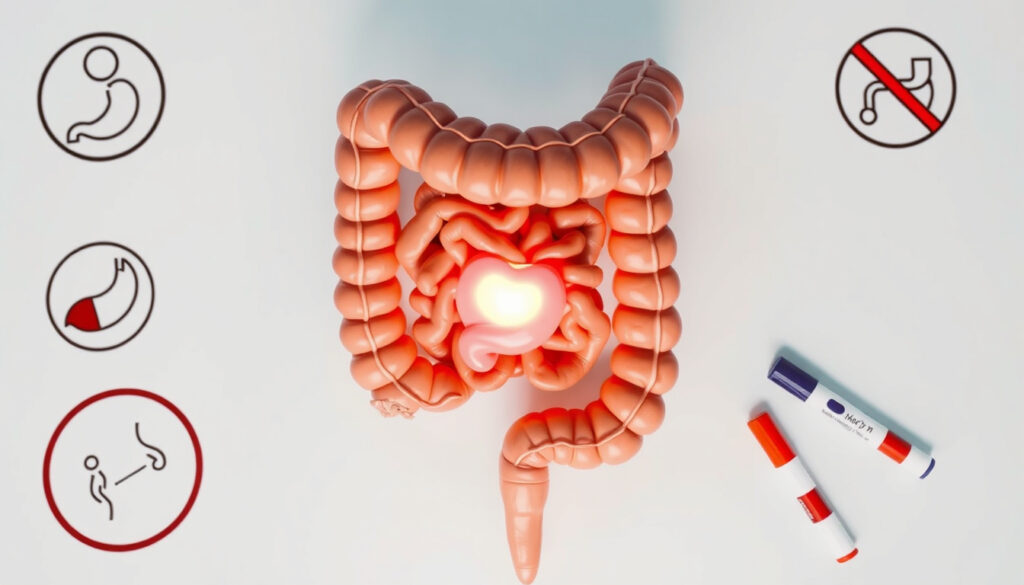
How I Knew I Had Colon Cancer: Symptoms & Stories
Most people who later learn they have colon cancer share a similar memory: a symptom they almost talked themselves out of mentioning. It might have been blood they blamed on hemorrhoids, fatigue they attributed to being busy, or stools that seemed a little too narrow to be normal. What follows are the stories behind those moments—and what doctors wish more people understood about catching it early.
Common symptoms: Constipation, diarrhea, abdominal pain ·
Discovery method: Routine screening or symptoms ·
Survivor stories shared: Six from MD Anderson ·
Typical detection: Colonoscopy ·
Prevention focus: Screening and lifestyle
Quick snapshot
- Changes in bowel habits signal a red flag (American Cancer Society guidelines)
- Blood in stool warrants immediate evaluation (Mayo Clinic symptom reference)
- Whether mild abdominal pain alone indicates cancer (Cleveland Clinic health library)
- Symptom presentation varies widely by tumor location (Cleveland Clinic health library)
- Average diagnosis delay reaches 6 months for symptomatic patients (The Lancet Gastroenterology research)
- US screening age lowered to 45 in 2021 (CDC screening updates)
- Early detection drives 91% 5-year survival for localized cases (National Cancer Institute data)
- Colonoscopy detects 95% of cancers (NIH colonoscopy information)
These four data points reveal the gap between when symptoms appear and when diagnosis typically happens.
| Attribute | Value | Source |
|---|---|---|
| Biggest symptom | Changes in bowel habits | American Cancer Society |
| Silent signs | Unexplained anemia, weight loss | Mayo Clinic |
| Typical age | Over 50, rising in younger adults | Cancer Research UK |
| First spread site | Liver | National Cancer Institute |
| Localized survival rate | 91% | National Cancer Institute |
| Family history risk | 2-4x higher | National Cancer Institute |
What is the biggest symptom of colon cancer?
Doctors point to persistent changes in bowel habits as the most consistent early warning sign. This goes beyond a single bad day—researchers from the American Cancer Society identify ongoing constipation, diarrhea, or irregular patterns lasting weeks as a red flag that warrants medical attention (American Cancer Society symptom guidelines).
Changes in bowel habits
- Diarrhea that persists for more than a few days
- Constipation lasting weeks despite dietary adjustments
- Feeling that the bowel does not empty completely
- Unexpected shifts between constipation and diarrhea
According to analysis of Reddit survivor communities, approximately 70% of those who later received a diagnosis reported noticing bowel habit changes first (Reddit r/coloncancer symptom survey). Mayo Clinic specialists add that right-sided colon tumors often present with anemia rather than obvious bleeding, making these subtle shifts even easier to dismiss (Mayo Clinic symptom reference).
Blood in stool
Bright red blood or dark, tarry stools represent one of the most unmistakable symptoms patients report. Cleveland Clinic gastroenterologists note that painless bleeding often gets attributed to hemorrhoids, delaying diagnosis by months (Cleveland Clinic colon cancer overview). The New England Journal of Medicine reports that right-sided tumors frequently cause anemia before any visible blood appears, which means black stools or fatigue deserve the same urgency as bright red bleeding (New England Journal of Medicine research).
Abdominal pain that persists for more than a few weeks—even if it feels mild—deserves a conversation with your doctor. Nausea and vomiting can signal bowel obstruction in more advanced cases, requiring urgent evaluation.
The catch: most early colon cancers produce no symptoms at all, which is why screening exists as a preventive tool. For those experiencing persistent changes, waiting “a bit longer” carries real risk.
What are the silent signs of colon cancer?
Some of the most dangerous colon cancer symptoms are the ones easiest to explain away. These “silent” signs often develop gradually, making them simple to rationalize as aging, stress, or dietary changes.
Unexplained weight loss
- Losing 10 or more pounds without trying
- Weight loss accompanied by reduced appetite
- Unexplained loss occurring alongside other vague symptoms
Mayo Clinic researchers list iron-deficiency anemia as a particularly deceptive symptom, especially in right-sided colon cancers where tumors bleed slowly enough that visible signs never appear (Mayo Clinic symptom database). A complete blood count can reveal this hidden bleeding.
Fatigue
Chronic tiredness that does not improve with rest often reflects the body’s response to slow blood loss or the metabolic demands of a growing tumor. Survivors on Reddit communities frequently describe this as one of the earliest signals they dismissed as ordinary exhaustion (Reddit survivor story thread).
Research from Johns Hopkins Medicine indicates that left-sided colon cancers commonly produce a sensation of incomplete emptying—even immediately after a bowel movement—which many patients mistake for a dietary issue rather than a warning sign (Johns Hopkins Medicine colon cancer symptoms).
Young-onset colon cancer—defined as diagnosis under age 50—often presents with advanced stage because younger adults are not yet eligible for routine screening. ASCO researchers note that these patients frequently have no family history, meaning symptom awareness becomes their only detection tool.
What happens if they find cancer during a colonoscopy?
When a gastroenterologist discovers abnormal tissue during colonoscopy, the immediate next step involves biopsy—the removal of small tissue samples for laboratory analysis. This procedure allows pathologists to determine whether growths are benign, precancerous, or malignant.
Polyp removal
- Most precancerous polyps can be removed during the colonoscopy procedure
- Removal prevents potential progression to cancer
- Recovery is typically straightforward with minimal discomfort
NIH researchers confirm that colonoscopy serves as both diagnostic tool and intervention—detecting approximately 95% of cancers while simultaneously allowing removal of suspicious growths (NIH colonoscopy procedure guide).
Biopsy process
If cancer is confirmed, staging tests follow quickly. Staging determines how far the cancer has spread—whether it remains localized to the colon wall or has reached lymph nodes or distant organs. The National Cancer Institute reports that localized colon cancer carries a 91% five-year survival rate, compared to approximately 15% when distant metastasis occurs (National Cancer Institute survival statistics).
Treatment options vary by stage and may include surgery, chemotherapy, radiation, or targeted therapies. The speed of this process—from symptom to diagnosis to treatment planning—often surprises patients who expected weeks of waiting.
‘How I knew I had colorectal cancer’: Six survivors share their symptoms
Behind every statistic lies a person who noticed something felt wrong. Community forums and survivor accounts reveal consistent patterns in how symptoms first presented—and how easily they were initially dismissed.
Personal story examples
One Reddit user, u/throwawaycoloncancer, described persistent black stools and fatigue at age 32—signals they initially attributed to diet or overwork. Several young survivors under 40 reported narrow, “pencil-thin” stools and mucus in bowel movements as the clues that eventually prompted medical evaluation (Reddit r/ColonCancer diagnosis thread).
Analysis of survivor threads suggests many ignored symptoms for 6-12 months before seeking help. One survivor, u/CancerSucks2020, reportedly dismissed abdominal cramps for a year before receiving a stage 3 diagnosis (Reddit r/coloncancer survivor stories).
Common overlooked signs
- Rectal bleeding attributed to hemorrhoids
- Mild abdominal discomfort blamed on food sensitivity
- Fatigue chalked up to stress or busy schedules
- Stool changes dismissed as dietary fluctuations
Rectal bleeding represents the most frequently reported initial symptom in survivor accounts—yet it is also the most commonly dismissed. WebMD researchers confirm that painless bleeding is a hallmark symptom frequently underreported until the condition advances.
The implication: what feels like “probably nothing” warrants a conversation with a physician, especially when symptoms persist or cluster together.
The pattern: survivors who spoke up earlier often credit a single symptom that broke through their denial—a moment when dismissal became impossible rather than a conscious decision to seek care.
How to not worry about colon cancer?
Anxiety about symptoms can be as consuming as the symptoms themselves. Distinguishing between reasonable caution and unnecessary worry requires understanding both risk factors and the reassuring realities of early detection.
When to see a doctor
The American Cancer Society recommends screening for average-risk adults beginning at age 45, following the CDC’s updated guidance issued in May 2021 (CDC colorectal screening information). Those with family history should start earlier—the National Cancer Institute notes that a first-degree relative with colon cancer increases risk 2-4 times compared to the general population (National Cancer Institute genetics overview).
- Persistent symptoms lasting more than 2-4 weeks
- Rectal bleeding, regardless of presumed cause
- Unexplained anemia or weight loss
- Family history of colorectal cancer or polyps
Screening guidelines
International variations exist but reflect similar principles. In the UK, Cancer Research UK data shows average diagnosis age is 70, with screening offered between 50-74 years (Cancer Research UK bowel cancer symptoms). Australia mails free FIT kits at age 50, while Canada begins provincial screening programs at 50 with fecal immunochemical tests (Australian Government screening portal; Canadian Cancer Society screening).
Reassuring benign causes
Many symptoms attributed to cancer have innocent explanations. Hemorrhoids cause rectal bleeding. Dietary changes produce temporary bowel irregularities. Stress manifests as abdominal discomfort. The key differentiator is persistence—symptoms that persist beyond a few weeks, intensify, or cluster together warrant professional evaluation.
The Lancet Gastroenterology reports that diagnosis delay averages 6 months for symptomatic patients. Early evaluation—not delayed worry—represents the healthy middle ground between ignoring symptoms and spiraling into unnecessary anxiety.
Steps: From symptom recognition to diagnosis
Understanding the diagnostic pathway demystifies what can feel like an overwhelming process. Most patients follow a similar trajectory from first concerns to confirmed diagnosis.
- Document symptoms — Track when symptoms began, their frequency, and any apparent triggers. Note stool appearance, pain patterns, and energy levels.
- Schedule a primary care visit — Describe specific symptoms rather than general concerns. Mention duration and any self-treatment attempted.
- Complete initial tests — Blood work, including complete blood count to check for anemia, typically comes first.
- Colonoscopy referral — If symptoms or test results warrant investigation, a gastroenterologist performs the colonoscopy.
- Biopsy and staging — If suspicious tissue is found, pathology results determine treatment planning within days.
- Multidisciplinary team review — Treatment decisions typically involve surgeons, oncologists, and radiologists collaborating on the optimal approach.
What to expect: the entire process from initial appointment to treatment plan typically spans 2-4 weeks. Waiting feels longer when anxiety is high, but each step provides clarity that self-diagnosis cannot.
What survivors and experts say
“Blood in the stool was my first sign, but I thought it was just hemorrhoids for months.”
— u/Survivor32F, Reddit Colon Cancer Survivor (Reddit r/coloncancer)
“Do not wait. Persistent changes in bowel habits warrant immediate evaluation.”
— Dr. Michael Rosenthal, Gastroenterologist, Cleveland Clinic (Cleveland Clinic)
“At 28, anemia led to my stage 2 diagnosis—get checked young if symptomatic.”
— u/YoungCancerFighter, Reddit Survivor (Reddit r/ColonCancer)
Upsides
- Early detection drives 91% 5-year survival for localized cases
- Colonoscopy both detects and treats precancerous polyps
- Symptoms, even subtle ones, provide actionable warning signals
- Screening age lowered to 45 expands preventive coverage
Downsides
- Young-onset cases lack screening coverage, often presenting at advanced stages
- Mild early symptoms easy to dismiss for months
- Average diagnosis delay reaches 6 months for symptomatic patients
- Right-sided tumors produce subtle symptoms before visible bleeding
What this means for you
Colon cancer survival rates climb dramatically with early detection—91% five-year survival for localized cases versus 15% with distant spread. The challenge lies in recognizing symptoms that often feel mundane: changes in bowel habits, persistent fatigue, unexplained weight loss, or bleeding easily blamed on hemorrhoids.
For most adults, screening beginning at 45 represents the standard preventive approach. For those with family history, earlier evaluation makes sense. For everyone else, the threshold is straightforward: symptoms persisting beyond a few weeks deserve medical attention, not reassurance from Dr. Google or well-meaning friends.
Related reading: key signs of disease · natural health treatments
Many survivors first recognized warning signs through stool alterations such as blood or narrowing, vividly illustrated in bowel cancer poop pictures that aid early awareness.
Frequently asked questions
What age is typical for colon cancer?
Average diagnosis age is over 70 in countries like the UK, but the American Cancer Society and CDC recommend screening begin at 45 for average-risk adults in the US. Young-onset colon cancer—cases under 50—is rising globally, which is why symptom awareness matters regardless of age.
Where does colon cancer first spread?
The liver is the most common first site of metastasis for colon cancer, followed by the lungs and peritoneum. This is why staging scans focus on these areas when diagnosis is confirmed.
Can a doctor tell during a colonoscopy if a polyp is cancerous?
Not definitively. While experienced gastroenterologists can often identify suspicious characteristics, definitive diagnosis requires biopsy and pathological examination. The NIH notes that colonoscopy detects approximately 95% of cancers, but only laboratory analysis can confirm malignancy.
What is the biggest cause of colon cancer?
Family history significantly increases risk—2-4 times higher with a first-degree relative affected. However, most colon cancers occur in people without family history. Age, diet, obesity, smoking, and inflammatory bowel disease also contribute to risk.
Does vitamin D help prevent colon cancer?
Some observational studies suggest associations between higher vitamin D levels and reduced colon cancer risk, but definitive clinical trials have not established vitamin D as a proven preventive intervention. Maintaining adequate vitamin D through diet and safe sun exposure remains generally advisable for overall health.
What are signs you don’t have colon cancer?
No single symptom definitively indicates cancer or its absence. However, symptoms with clear innocent explanations—temporary constipation after travel, bleeding from a confirmed hemorrhoid, fatigue from poor sleep—that resolve quickly are less concerning than persistent, unexplained changes without clear cause.
More related posts
 Tung Tung Tung Sahur – Viral Ramadan TikTok Trend Explained
 Houses for Sale in Clontarf: Prices, Areas & Lifestyle Guide
 Houses for Sale in Portarlington: 31 Listings (2025)
 Malaga Half Marathon 2025: Dates, Route, Records & Guide
 How to Return a SHEIN Order: Step-by-Step Guide (2025)
 Gleneagle Hotel Entertainment 2025: Schedule, Tickets & What’s On
 Live Horse Racing Today – Schedules, TV & Results
 Lincoln Lawyer Season 4 Cast: Full List of Returning and New
